Ken Lelen

Ken Lelen
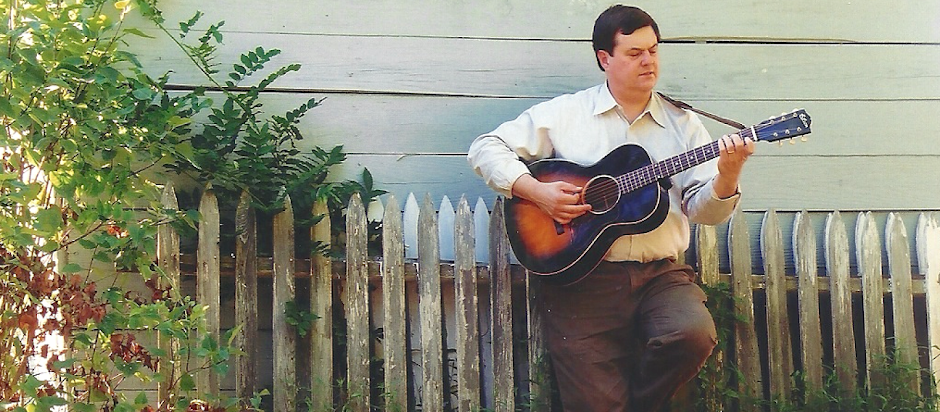
Ken Lelen sings great American ragtime, jazz & swing and plays vintage acoustic guitars for an authentic, back-in-the day sounds. Photo by Mike Nixon - Aug 2002.
Showing posts with label Concert Themes. Show all posts

Monday, May 19, 2025

Speak Easy Jazz

Hot, sweet sounds played on America's band stands,

records and radio that became its first popular music

_______________________________


                 © 2025 - Kenneth Lelen - All Rights Reserved


Barbara Stanwyck (1907 - 1990) —
dancer in 1922-23 Ziegfield Follies
Speak Easy Jazz Concerts
 

This program offers some of the hot, sweet tunes that were hits from 1919 to early 1930s. This music was popular with the era's speakeasy denizens — the stage door johnnies, flappers, college kids, vaudeville dancers, boot-leggers, crooners and doughboys. The hallmarks of these 100-year-old tunes are the syncopated rhythms, memorable melodies and clever lyrics.


Many jazz tunes were first heard when played by small combos on band stands, vaudeville stages, juke joints and radio broadcasts. You could also could hear jazz on 78 rpm records positioned in a device called a Victrola – a small cabinet that enabled listeners to "play" a record on a turntable that fed sound into an external horn.


Musical luminaries of the 1920s

The rascals who produced these jazz gems were up-and-comers — the vocalists, songwriters, song pluggers, band leaders, pianists, as well as guitar, clarinet, horn and sax players. Don't forget musicians on kazoos, tenor banjos and comb & tissue paper.


Any list of 1920s jazz cats includes such musical luminaries as Lonnie Johnson, Al Jolson, Gene Austin, Rudy Vallee, Louis Armstrong, Irving Berlin, Fats Waller, Eddie Lang, Hoagy Carmichael, Nick Lucas, Isham Jones, Cliff Edwards and Paul Whiteman.


Such an esteemed group of jazz artists includes as well such vocalists as Bessie Smith, Ma Rainey, Ethel Waters, Sophie Tucker, Ruth Etting, Alberta Hunter and Mildred Bailey.


We also can't omit singer-songwriter Victoria Spivey and her Chicago Four, pianist-arranger Lil Hardin Armstrong and the Hot Five combo she led with husband Louis, or songwriter Dorothy Fields, who wrote lyrics of more than 400 songs for Broadway musicals and Hollywood films.

_________________________________________________________


Mound City Blue Blowers
This jazz combo made 30 recordings between 1923 and 1936. Earliest members included Dick Slevin (kazoo), Jack Bland (banjo), Eddie Lang (guitar) and Red McKenzie (comb & tissue paper). Lack of drum kit led to use of a suitcase brushed with small hand brooms.

Later members included: Frankie Trumbauer (sax), Jack Teagarden (trombone), Coleman Hawkins (sax), Muggsy Spanier (cornet), Glenn Miller (trombone), Nappy Lamare (banjo), Jimmy Dorsey (trombone) and Bunny Berrigan (trumpet).


_________________________________________________________


Jazz hits from the 1920s include:

• April Showers           • Sweet Sue–Just You          • Marie

• It Had To Be You       • If You Knew Susie             • Bye Bye Blues

• Tip-Toe Thru Tulips    • April Showers                   • Bye-Bye Blackbird

• Toot-Toot Tootsie       • She's Funny That Way       • Stardust

• My Blue Heaven        • Carolina In The Morning    • Makin Whoopee

• Five-Foot-Two           • Honeysuckle Rose             • If I Had You     

• Ain’t Misbehavin'       • It All Depends On You        • After You've Gone

• CA Here I Come        • I'll See You In Dreams       • Always

• Avalon                      • Ain't She Sweet                • Blue Skies


People adore these up-tempo tunes today as much as they did back in the 1920s. Songs in the Speak Easy Jazz program include:


Sheik Of Araby was composed in 1921 by Harry Smith and Francis Wheeler, with music by Ted Snyder, in response to the popularity of Rudolph Valentino in the movie of the same name. It is said that New Orleans jazz artists were first to put the song in their repertoire, insuring its longevity.


Oh, Lady Be Good! was composed by George and Ira Gershwin for the 1924 musical, Lady, Be Good! The Broadway play featured the premier appearance of the brother-sister dance team Fred and Adele Astaire and ran for 330 performances.


Cliff Edwards (1895 - 1971)
"Ukulele Ike"
 and admirer


This Gershwin tune spawned a host of hit recordings by such artists as Paul Whiteman and his orchestra (1924), Cliff "Ukelele Ike" Edwards (1925), Jack Hylton and his orchestra (1926), and Buddy Lee with the Gilt-Edge Four (1926). In the 1930s the song was a hit for jazz artists Benny Goodman, Slim & Slam, Artie Shaw and Count Basie.


In 1947, Ella Fitzgerald's recording of "Lady Be Good" was notable for her scatting. Her 1959 recording of the song helped establish the Gershwin Songbook at the very top of America's greatest music.


Jimmy McHugh (1894 - 1969)
Dorothy Fields  (1905 - 1974)

  I Can’t Give You Anything But
  Love — It was composed in 1928 by
  Jimmy McHugh and Dorothy Fields for
  "Blackbird Revue," a Broadway show
  that ran for two years.

  One urban legend says the song was
  written in an hour after they heard
  a young couple lament the lack of
  resources as they window-shopped at
  Tiffany's on Fifth Avenue in New York.

  According to author Jack Burton, the
  musical pair heard the young man say,
  "Gee, honey, I'd like to get you a
  sparkler like that, but right now, I
  can't give you nothin' but love!"

Today, "I Can't Give You Anything But Love" is a well-loved standard played in every repertoire, in every venue and at every speed.

Bessie Smith (1894 - 1937)

Nobody Knows You When You're Down and Out — This song was composed by Jimmie Cox in 1923

and popularized in a recording by songster Bessie Smith in September 1929 — only a few weeks before the Stock Market Crash. This ragtime-era song bemoans the  vicissitudes of fortune and fickleness of friends amidst hard times.


"Nobody Knows You" was a standard for jazz and blues artists, everyone from Sidney Bechet in 1938 and Leadbelly in 1948 to Scrapper Blackwell in 1959. More recently it became a hit recording for British guitarist Eric Clapton in 1992 on his deceptively titled album, Unplugged.


Ain't Misbehavin', according to popular legend, was composed on a child's piano in 1929 by Thomas "Fats" Waller (1904-1943) while "lodging" in alimony prison.


Fats Waller (1904 - 1943)

Fortunately, Fats had deals with a few Tin Pan Alley publishing firms that paid him a flat fee, not a royalty, for each song he wrote. It is said he would offer the same song to two publishers to "augment" his return. In this case he earned enough on one song to get out of jail. Sadly, Fats never saw another dime on the song.  


Other recordings of "Ain't Misbehavin'" were covers by singing star and actress Ruth Etting (1897-1978), crooner Gene Austin (1900-1972), and band leader Leo Reisman (1897-1961) in 1929. That same year Louis Armstrong (1901-1971) played it in a popular musical revue called Hot Chocolates at Connie's Inn, a Harlem speakeasy.


Connie's Inn, like its rival, the Cotton Club, featured entertainment by black performers in a music pit and barely clad female dancers on a stage. The audience included mostly white males, businessmen, and their secretaries seated at dimly lit tables.


All that jazz

It's been said that long before he wrote "Stardust," "Up a Lazy River" or Georgia On My Mind," Hoagy Carmichael would travel from his college dorm in Bloomington, Indiana to Miami, Chicago, New York and Los Angeles just to hear the jazz he loved and meet its musicians. But he wasn't the only one looking to soak up all that jazz.


Hoagy Carmichael (1899-1981)

Indeed, some say the public's attachment to jazz was lubricated by several factors. They included an easy access to bootleg liquor, the proliferation of 78-rpm records, rise of radio, the growth of both legitimate stage and Broadway musicals, and the marvel of "talkies."


Ultimately, ragtime and jazz music helped upend the social and sexual mores of the day as much as the back seats of Henry Ford’s Tin Lizzie autos. Today, because of how jazz music shaped our culture, we call the 1920s — America's first post-War era — as a time known both as the Roaring Twenties and as the Lost Generation.


___________________________________________


 © 2025 — Kenneth Lelen — All Rights Reserved


Sunday, December 15, 2024

She Did It Her Way

Celebrating female vocalists, recording artists & composers with stories and songs


Nashville songwriter
Cindy Walker (1918 - 2006)

   March is Women's History

   Month, and for more than a

   decade I've been invited to

   play She Did It Her Way

   concert programs numerous

   times for my audiences at

   public libraries, life-care

   communities, social clubs

   and other venues.


   Most recently, I performed

   this program for audiences

   in Erie and Pittsburgh PA, in

   Dover DE, in Middlesex,

   Whiting, Milltown, Toms

   River and Bloomfield NJ, in

   Parksville and Frederick MD,

   and in Pound Ridge NY.


The program features stories and songs of female vocalists active from the late 1920s to mid-1960s. We highlight the hit tunes of such musical luminaries as Bessie Smith, Ella Fitzgerald, Billie Holiday, Jo Stafford, Judy Garland, Kate Smith, Dinah Shore, Peggy Lee, Mitzi Gaynor, Patti Page and Dinah Washington.


In late 2023 the program expanded to honor female composers of pop songs. Concerts included tunes written by such talented female songwriters as Chilton Price, Dorothy Fields, Cindy Walker, Claire Rothrock and Sadie Vimmerstedt.


Tin Pan Alley Songwriter
Dorothy Fields (1905 - 1974)

The emotional strength of their music and the cultural contribution of their art has been over-looked by fans, musicians and media for too long. What's more, few of these women saw a lot of recognition for their work during their lifetime despite the many popular hit songs most of them produced. To put it bluntly, people liked the songs, but they never really knew who composed them.


Over the past few years my audiences have given a warm response to hearing about these female vocalists and composers, as well as their stories and their tunes. As a result, these artists have become the key element of what is now my most popular concert program.


                               _________________________


Program offers songs by these female vocalists:


The Lady Is A Tramp — This song was launched into popularity by former child actor Mitzi Gaynor in a 1937 coming-of-age Broadway play, Babes In Arms. The song is a spoof of big-city socialites and the clever contrivance of the composer Richard Rodgers and lyricist Lorenz Hart. Gaynor would meet fame and fortune from her starring role in the 1958 movie musical South Pacific.


The song was also sung in 1937 by Edythe Wright, a vocalist in Tommy Dorsey's band and Judy Garland in 1939 for the Hollywood version of the play. Lena Horne had a hit with the song in 1948 and Frank Sinatra saw huge LP record sales with it by his singing role in the 1957 movie Pal Joey.


Time has only deepened the sonic well of this song. To wit, the most exciting and classy version of this song just might be the combination of the 25-year old pop icon Lady Gaga and an 85-year old Tony Bennett for his 2011 album Duets II.


      Lady Gaga and Tony Bennett sing "The Lady Is A Tramp" in 2011


I’m Through With Love — This jazz standard was composed by Fud Livingston, Matty Malneck and Gus Kahn in 1931. Early covers by female vocalists included Dinah Shore in 1941 and 1951, Sarah Vaughn in 1947, Carmen McRae in 1957, and Ella Fitzgerald in 1959.


The song gained notoriety and a perch in the pantheon of torch songs by Marilyn Monroe, who played vocalist Sugar Kane in the 1959 film, Some Like It Hot. Near the movie's end she sings it as a lovelorn lament while perched atop a piano in a black slinky dress. Some say her dress was as memorable as the song.


    Marilyn Monroe sings "I'm Through With Love" in the 1959 film Some Like It Hot

Dream A Little Dream Of Me — This dreamboat of a song was written by the orchestra leader Fabian Andre, arranger Wilbur Schwandt and lyricist Gus Kahn. It was first recorded in 1931 by band leaders Ozzie Nelson and Wayne King with vocals from their “girl singer,” Kate Smith.


Plucked from obscurity in 1968, the song became the signature tune of Cass Elliott, a member of the folk-rock group The Mamas & The Poppas. Her solo recording sold seven million copies.


         Cass Elliott sings "Dream A Little Dream Of Me" in 1968

On A Slow Boat To China — This is a 1948 ballad by composer and lyricist Frank Loesser, who wrote tunes for many successful Broadway musicals and Hollywood films made from the late-1930s to mid-1960s. A 1993 biography by his daughter Susan Loesser states the song was her father’s romantic twist on the well-known poker term that derides the hapless person who loses “steadily and handsomely” at cards.


It seems everyone and his cousin likes to give this song the up-tempo crooner treatment, usually seasoned in Dixieland or Vegas overtones. This musical rabble includes covers by Jo Stafford, Peggy Lee, Joni James, Rosemary Clooney, Bette Midler and Liza Minelli.


In my view, however, it wasn’t until Ella Fitzgerald teamed up with guitarist Joe Pass for their 1986 album Easy Living that “On A Slow Boat To China” received the artful, wistful, romantic treatment it deserves.


         Ella Fitzgerald and Joe Pass perform "On A Slow Boat To China" in 1981


                               _________________________


Program has songs by these female composers:


You Belong To Me — This popular ballad from 1951 is memorable to many fans for its opening line: “See the pyramids along the Nile.” It was entirely written by [Ms.] Chilton Price, who had little experience in the pop music world.


So, when the song was published she shared credit with two experienced hands — country music artists Pee Wee King and Redd Stewart — who gave assistance with publicity, distribution and tinkering with the lyrics.


Indeed, King and Stewart revised the song's lyrics from its original late-1940s wartime focus to one with a universal view of separated lovers. As a result, the song has had an appeal for fans generations apart.


It was first recorded in the summer of 1952 by Joni James, Jo Stafford, Patti Page, Ella Fitzgerald and Dean Martin. Best of the bunch was the smooth and sweet vocals of Jo Stafford, whose 78 rpm record spent 24 weeks on pop charts in the U.S. and U.K.


A decade later The Duprees, a five-man doo-wop group from Jersey City NJ, saw their 45 rpm record reach No. 6 on Billboard’s Hot 100 chart. Believe it or not, the one and only Ringo Starr also recorded this song — a boisterous and speedy dance-hall variant — in 1981.


         Jo Stafford sings "You Belong To Me" in 1952

         The Dupree's sing "You Belong To Me" in 1962

You Don’t Know Me — This ballad was written in 1955 by country music song writer and lyricist Cindy Walker after country music singer Eddy Arnold cornered her at a disc-jockey convention in Nashville and pitched an idea for a song with this title.


Walker agreed to turn Arnold's concept into workable lyrics and melody, she told an interviewer for the Grammy Foundation Living History. “Let me let it cook and I’ll let you know,” she told him.


“I was up in my little studio just sitting there. All of a sudden, here comes this song. 'You give your hand to me and you say hello'," she recalled.


"But I couldn't finish it. I couldn't find any way to finish it. Maybe two or three weeks went by and nothing happened. One day, [I thought] 'You give your hand to me and then you say goodbye,' and when it said that, I knew exactly where it was going.


“To make a long story short, I couldn't wait to get to the phone to call Eddy." Lest it go unsaid, a hit recording by Eddy Arnold quickly followed.


Many people have recorded this song, but the best-selling version was the plaint and anguished cover by Ray Charles in 1962. It peaked at #1 for 14 weeks on Billboard’s Pop Album chart. Today, it’s revered as the most soulful version of an emotionally impactful tune.


         Ray Charles sings "You Don't Know Me" in 1962

I Wanna Be Around — This originally was planned as a revenge song from Sadie Vimmerstedt, a Youngstown OH widow and cosmetologist. In the early 1950s she was upset Frank Sinatra divorced his wife Nancy and married Ava Gardner, who eventually left him.


Sadie began to write the song only to realize her musical skills were limited. So, in 1957 she sent a handwritten note to tunesmith Johnny Mercer with the song’s first line — "I want to be around to pick up the pieces, when somebody breaks your heart." She asked for Mercer’s help in finishing the ballad, which took another five years.


In 1963 balladeer Tony Bennett had a big hit from Sadie and Johnny’s collaboration. Mercer gave Sadie half the song’s royalties, which were sizeable given the number of people who recorded it. Among the many covers by female artists are records by Aretha Franklin, Patti Page, Julie London, Brenda Lee, Dinah Washington and Eydie Gormé.


       Tony Bennett sings "I Wanna Be Around" in 1963


I Don’t Know Enough About You — This is a very clever song written by a pair of very clever people, vocalist and lyricist Peggy Lee, and her husband, writer and guitarist Dave Barbour. They married in 1943 while both performed in the Benny Goodman Orchestra. Within a year, both left, however, due to Benny’s prohibition on band members fraternizing with his “girl singer.”


By 1945 they were writing songs and making records for Capitol Records. Peggy would record the song three times in her life — in December 1945, January 1956 and September 1992.


This version of the song was produced in 1950 as a promotional film that reveals the couple’s obvious chemistry. Key to this achievement is Peggy’s jazz-tinged vocals and subtle facial gestures, as well as Dave’s smooth guitar work.


            Peggy Lee and Dave Barbour perform "I Don't Know Enough About You"


                                 © 2024 — Kenneth Lelen — All Rights Reserved


Saturday, March 2, 2024

                                  Concert Themes for 2024

Every song tells a story

––––––––––––––––––––––––––––––––––––––––––––––––––––––––––––––––––––––––––––––––––––––––

         VintageMusicConcerts trace musical, romantic & historic themes with

         clever lyrics, memorable tunes & amusing anecdotes. Delighted adults

         and seniors find their favorite tunes graced with wit and warmth, while

         hosts say our themes are easy to promote.


Crooners, Swingers and Idols — Concert of hits & ballads popularized by heart-throb crooners, Rat Pack swingers & TV-dinner idols of 1950s & 1960s — hit songs for a generation that found pop music on record players, transistor radios, juke boxes, the movies & sock-hops in high school gyms.


Vintage Guitar Roadshow — One hundred years ago today's vintage acoustic guitars were new instruments. Program offers syncopated ragtime, early jazz & rhythmic swing from 1920s, 1930s & 1940s played on vintage acoustic guitars from the same era. You'll hear back-in-the-day tunes — most of them familiar — that people heard when musicians initially performed them as new music.


Poets of the Prairie — Concert explores impact of 20th Century's most talented musical artists – Midwesterners including Woody Guthrie, Gene Autry, Johnny Cash, Bob Dylan, Phil Ochs and Jimmy Webb, and Canadians including Ian Tyson and Gordon Lightfoot, Joni Mitchell & Buffy Sainte-Marie.


Kingston Trio Redux — Concert of well-known, much-loved tunes by the most successful combo of the 1960s, a trio that stretched the pop music scene with their brand of folk, folk-rock, calypso and show tunes they performed in small clubs, coffee houses, colleges and hugely successful LPs.


The Moon, The Stars and You — Concert summons the moon and stars for romantic insight with such classics as Blue Moon, Pennies From Heaven, Fly Me To The Moon, As Time Goes By, Stars Fell On Alabama, Beyond The Sea, Stardust, Dream A Little Dream Of Me & I'll See You In My Dreams. 


Roots of American Jazz — Concert of jazz hits heard for the first time in the late 1920s and early 1930s in speakeasies, saloons, juke joints, live on the radio and 78 rpm records crafted by popular and obscure cats  —  from Isham Jones, Ruth Etting and Bix Beiderbecke to Mildred Bailey, Bessie Smith, Rudey Vallée, Paul Whiteman, Louis Armstrong and Hoagy Carmichael.


MidCentury Melodies — Concert of pop music from 20th Century’s heart – songs by Rosemary Clooney, Tony Bennett, Frank Sinatra, Nat King Cole, Jo Stafford, Vaughn Monroe, Ella Fitzgerald, Peggy Lee, Eydie Gormé, Patti Page, Eddy Arnold, Perry Como, Dinah Washington and others. 


She Did It Her Way — Concert honors lives, careers & tunes of female composers, vocalists & pop recording artists of 1950s & 1960s. Program also touts previously unheralded songwriters, including Dorothy Fields, Claire Rothrock, Cindy Walker and Sadie Vimmerstedt.


He Did It His Way — Concert honors lives, careers & tunes of male song writers, pop vocalists and recording artists of 1950s & 1960s. Program also celebrates unheralded composers from Joe Kosma Bart Howard, Ned Washington and J.D. Loudermilk, to Johnny Black, Neil Moret & Richard Whiting.


My Achy Breaky Heart — Concert of tear-stained ballads, steamy pop standards and love-struck laments from the 1950s and 1960s written by N.Y., L.A. and Nashville songwriters for movie, folk, Broadway and country music fans. Everyone deserves an hour of musical heartburn.


Great American Cabaret — In 1950s and 1960s couples dated, dined & danced in cabarets, juke joints, hotel ballrooms and nightclubs with fine dining, live music & dance floors. We offer ballads, swing standards and pop hit tunes of jazz combos, saloon singers and dance bands. 


Folk Song Boomers — Concert of the folk, protest, traditional & ethnic songs that were sing-along anthems, radio favorites and hit recordings for the post-WW II teenagers known as Baby Boomers.


Broadway Song Mementos — Tunes that Great White Way producers used to push dramatic and comedic storylines, tout ingénues, spur media publicity and draw extra income. Others chose sheet music sales, radio airplay, cast recordings, jukebox selections and conversion to feature movies.


Great American Songsters — Song and stories of the 20th Century composers, vocalists and musical scamps who spawned genres now known by their marketing monikers: jazz, folk, blues, Americana, swing, boogie-woogie, hokum, folk rock, country 'n western, and Brill Building pop.


Hollywood Souvenirs — Concert of songs that enabled Hollywood moguls to capitalize on the background music and storyline tunes in celluloid dramas, torrid romances & screwball comedies.

                                    ––––––––––––––––––––––––––––––––––––––––––––––––––––––

                                                  © 2024 - Kenneth Lelen - All Rights Reserved