Ken Lelen

Ken Lelen
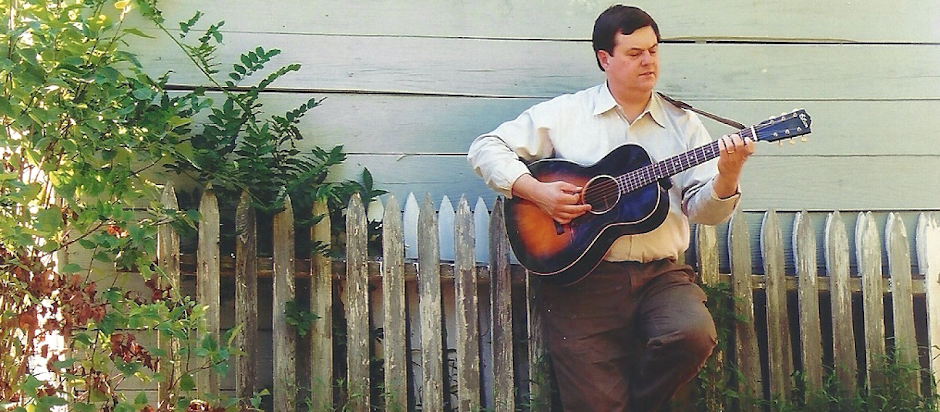
Ken Lelen sings great American ragtime, jazz & swing and plays vintage acoustic guitars for an authentic, back-in-the day sounds. Photo by Mike Nixon - Aug 2002.

Tuesday, February 19, 2013

"Bark" restored to the Sandburg Guitar
Historic treasure reveals its powerful poetic pedigree
___________________________________
 © 2012 by Kenneth Lelen — All Rights Reserved 
Posted Aug 2012  —  Revised Feb 2013
Comments in FEEDBACK at article's end


Recent repairs and set-up work on my 1933 Martin OM-18, an auditorium-sized acoustic guitar once owned by Carl Sandburg (1878-1967), have dramatically improved its playability and enabled this vintage instrument to sonically blossom to its full potential.
     An OM-18 from the 1930s is among the lightest and most responsive 14-fret guitars C. F. Martin & Co. ever made. Today, it is treasured as much by vintage instrument collectors as by musicians seeking a guitar with an authoritative bass, crisp mid-range bark, clear treble voice and throbbing sustain.

The Sandburg Guitar — 1933 Martin OM-18

The body and proportions of the OM, or orchestra model, were designed by Martin in 1929 for guitar players who wanted volume and playing ease. To do this, the OM introduced a longer-than-conventional neck (14 frets to the body, not 12 frets), longer-than-conventional scale (25.4 inches, not 24.9 inches) and musician-friendly neck (1.75 inch wide at the nut).
     It is not known how many of the 765 OM-18 models made between 1930 and 1933 and sold for $60 have survived, but many that remain sound phenomenal. As someone who has owned, repaired, played and sold more than 150 vintage acoustic guitars in the last 17 years, I'm eager to report this historic American artifact now plays and sounds really nice.

Repairs by Hanson and Crawford
The repairs and set-up work that restored the Sandburg guitar's playability and tone were completed in November 2011 by luthiers Greg Hanson and David Crawford, who are based in Durham NC. They have worked on all but a few of my guitars since 2002 and know how I like to play an acoustic guitar:
     Musical tastes: pre-war ragtime, jazz and swing.
     Playing habits: flat picking, single-note musical lines, comping, two- and three-note chords, down strokes, upstrokes, raking, and heavy right-hand attack.
     Set-up specs:  high string heights, wide nut spacing, compensated and intonated saddle, and high break angle for power and volume.
     Using a small piece of maple rescued from a 100-year-old piano, Hanson glued an overlay onto the original bridge plate. It has beveled edge (lip) along its back edge (facing the tail block) should removal be necessary in the future.
     The existing saddle was replaced by Hanson with a new compensated and intonated bone saddle. He also installed a new bone nut with the widest string spacing possible to accommodate left hand comfort. String heights were set between 5/64th and 7/64th inch to accommodate my flat-pick playing.
     Meanwhile, Crawford re-glued a bass-side stretch of plastic binding under the armpit that had come loose. And finally, to my great relief, he patiently and properly crowned and dressed the guitar's bar frets!

Older repairs revealed
Beginning in the 1910s, Sandburg owned and played many guitars during his long life. He bought this fine old Martin OM-18 (SN 54123) at an L.A. pawn shop in 1957 or 1958 while visiting his friend Mildred Norton (Loewenthal), a classical music critic for the L.A. Daily News and other periodicals. In the late 1950s and early 1960s Sandburg worked as a script consultant for movie producer George Stevens, and wanted a personal guitar for his use while on the West Coast. It remained in Norton's possession until June, 2000, when a Southern California guitar dealer bought it six months before Norton's passing at age 90 in December, 2000.
     The Sandburg guitar has seen many repairs in its history, and identifying the luthiers who repaired it and ascertaining the date of their work has been hard. For example, at some point someone installed splints to each side of the fingerboard extension where two tortoise shell pick guards delaminated, pulling up top wood as glue deteriorated. One of these pick guards, as well as the instrument's provenance (love letters, poetry, mss. photographs and other Sandburg ephemera), were present when I acquired the guitar in October, 2008 by trading five vintage guitars and a small amount of cash to Buzzy Levine of Lark Street Music in Teaneck NJ.
     Early on I discovered the bridge plate surface was chewed up by years of use. Nearby, three small holes in the top near the sound hole were filled and two holes drilled in the bridge and bridge plate for an electric pick-up mount were plugged.
     What's more, the spruce top, which was sanded to even out scratches, dings and pick wear, had received a lacquer over-spray, while the mahogany back, sides and neck were lightly sanded and refinished. Topside, a forgery-grade ebony bridge had been installed.
     One source, writing with the pseudonym "Fingerstyle 2" on the Unofficial Martin Guitar Forum website in January, 2006, said luthier Jim Prior of Pioneer Music in Portland, OR performed the splint repairs and refinishing work in 2000. However, in 2011 the staff at Pioneer told me they had no record of the work and that Prior had retired. The shop has since closed.

Norton sells Sandburg's guitar
In late 2008 I was able to confirm that Laguna Beach CA guitar dealer Dan Yablonka bought the Sandburg guitar and most of its provenance from Mildred Norton. The former classical music columnist was in her late 90s when Yablonka visited her twice in June, 2000.
     Norton was a small-statured woman, Yablonka recalled. "She was thin and in fairly good shape for a woman her age," he said. "She had a husband [Irving Loewenthal] who was sitting in a chair on oxygen and didn't look well."
     Norton had located Yablonka from a reference by one of her neighbors in a retirement community. "She was so cagey about [selling the guitar] that I was glad to get out the door the first time," he said. "It wasn't till I was leaving that I found out it once was Sandburg's, but I got out of there not thinking he would add that much value."
     Yablonka re-thought the impact of Sandburg to the value of the guitar and visited Norton a second time to obtain the papers, letters, photographs and articles that now accompany the instrument. "She wanted more money for the papers, which I am pretty sure she was willing to consider giving me the first time as I thought back, so a few hundred more was exchanged."
     Mildred wasn't what you'd call "charitable or at least not on that day," Yablonka told me. "She was a haggler and to be honest she got in the mid-four figures for the guitar with its papers and all."
     Yablonka later was told by vintage guitar experts at Gruhn Guitars in Nashville TN and Mandolin Brothers in Staten Island NY not to do any repairs on the instrument. He has confirmed that no repairs or refinishing work were made on the guitar while it was in his possession. The guitar was maintained in the condition he found it for historical sake, he said.
     Still, the question remains: Were these repairs made while the guitar was in Mildred Norton's possession or prior to Carl Sandburg's purchase of the guitar in the late 1950s?

Long road to restoring playability
In late 2001 possession of the guitar moved to Mandolin Brothers, which offered the instrument and its provenance for a few years. Unsuccessful at moving this historic relic, in late 2005 the guitar was sold in an eBay auction for $10,000 to guitar dealer Buzzy Levine at Lark Street.
     When I first played the guitar at the Lark Street shop in late 2007, it sounded O.K., but needed a neck reset, fret dressing and other set-up work to facilitate my playing style. String height over the fingerboard was high and much left-hand pressure was needed for noting. Also, it was hard to get and keep the instrument in tune.
     In March 2008 Levine hired luthier Stephen Sauvé of North Adams MA to reset the neck. According to Sauvé, he also dressed the frets in the area of the body joint and installed a bone saddle.
     The tone was now enticingly sweet and woody, but thin or constrained. Questions remained: Was the soundboard's ability to vibrate compromised by the sanded top and thick lacquer coat? How much was the bridge plate harmed by previous repairs and inadequate string-ball contact? Could the string slots across the nut take a wider spacing to accommodate my preferences for left-hand comfort?
     The guitar has a nut width of 1.75 inch, but string spacing was set at less than that, making play difficult with my big hands and playing style. In addition, a previous player's thumb had ground a slight swale into the mahogany neck along the second fret of the bass-side edge.
     Adding confusion to the job of assessing condition and the needed repairs was a website listing by Philadelphia instrument dealer Fred Oster. When he offered the Sandburg guitar for sale on his website for four months in early 2009, he said the bridge plate was a replacement and its Grover tuners were original. In fact, neither assertion was correct.
     His erroneous views were exacerbated by the armchair-quarterbacks on the Unofficial Martin Guitar Forum between 2009 and 2011. A popular listserve for guitar players and collectors, UMGF members offered a few unsubstantiated and conflicting views on the condition, value, previous repairs, usage and sound of my guitar.
     So I had the Sandburg OM examined by several vintage guitar dealers, independent luthiers and Martin experts, including Michael Dickinson, head of repair and customer service for C.F. Martin Co. in Nazareth PA, which briefly considered buying the instrument for its factory museum. Dickinson's assessment of the guitar and its condition was a single-sentence non-sequitur: "Don't let our lack of communication lead you to think we're not interested," he said.
     I later showed the instrument to well-known luthier Steve Kovacik of Scotia NY, who confirmed the bridge plate is indeed original, 1.375-inch wide and properly tucked in under the top braces. What's more, the bridge plate and nearby interior surfaces exhibit no signs of tool work, modification or excess glue, he said.
     When I bought the guitar it was fitted with six open-back, seamed butter-bean Grover tuners that were made in the late 1940s with spider gears and peened-over rivets. Not original and not working well, I replaced them with butter-bean Grovers cannibalized from a 1934 Martin 0-17 that worked only slightly better. Then, last fall Hanson and Crawford replaced the second set of tuners with new Grover butter-bean replicas that work very well. Both vintage sets are now stored in the guitar's case pocket.

Power, tone and sustain restored
Once I acquired the Sandburg guitar I parked my considerations about tone, playability and appearance. I wanted to explore a host of provenance issues that surround this important piece of American history.
     For example: Why was Sandburg the poet, folk-song collector, journalist, children's book author and Pulitzer Prize-winning biographer writing movie scripts in Hollywood? What role did Mildred Norton, Marilyn Monroe, Lucy Kroll and his wife Paula Sandburg play during the last decades of the vagabond poet's life? What other documents or ephemera associated with this guitar and the Sandburg-Norton relationship can we locate? And what other guitars did Sandburg play?
     In 2010 I began playing the Sandburg guitar at my Vintage Music Concerts across the East Coast, but by the spring of 2011 found it necessary to attend to the playability issues. Its bar frets needed dressing so I could finger notes and chords and move up and down the neck on any tune. I also realized it needed a bridge plate patch to provide a solid surface for string attachment and enable the guitar to properly vibrate.
     Then, in April 2012, five months after Hanson and Crawford completed their work, the guitar's tone, volume and sustain "kicked in" like a turbo-charger. And to my pleasant surprise, the sound all of a sudden gained an astonishing depth, liveliness and air.
     Finger-picked, the tone is beguiling and note separation is crisp. The tone is warm and liquid. Flat-picked, it speaks has a strong bass, horn-like mid-range, ringing trebles and church-bell overtones found only in a long-scale, mahogany-bodied, 79-year-old Martin.

The Sandburg guitar "speaks"
The Sandburg OM has opened many interesting doors for me as a writer, musician and historian. I plan to update this website account as I receive fresh input, comments and corrections. And as I play this fine and historic guitar, I will continue researching the multi-faceted Carl Sandburg, his lifelong interest in Hollywood, his many female admirers and the guitars he played.
     Owning the Sandburg guitar and its provenance has led me down many interesting roads. I've shown it to a lot of people at my concerts, spoken about it on the radio and written about it in a number of places. Some people esteem the guitar as an important musical relic. Some see a fine old Martin or covet it as a collectible guitar. Others cluck like schoolmarms over the love letters in the provenance package and postulate what they reveal about an historic figure.
     Yet few people know who Sandburg really was. He's lost to American history even as he remains a vital part of it. Among other things, he was a socialist before socialism was a bad thing. He glorified the art and artists of film making long before talkies, 3D and the Coen brothers. He wrote poetry that made people aware of their feelings for nature. And years ago he collected hundreds of American folk songs that people still sing today.
     Yet, alas, some people think he was the white-haired old man who read poetry at JFK's inauguration in January 1961.
     Though I've helped restore Sandburg's OM to good playing condition, I don't really own it. I've discovered I only possess it in order to learn about Sandburg — his life, work, travels, friends and writings — and pass on what I've learned to the next owner. It's a wonderful instrument to play, but it's also my teacher. 

_______________________________________ 
© 2012 by Kenneth Lelen — All Rights Reserved

A journalist for nearly 30 years before launching Vintage Music Concerts,
Ken Lelen sings ragtime, jazz and swing and plays vintage guitars for niche
markets, diverse groups and sundry venues across the East Coast. He has
played acoustic guitar since the summer of 1963.

___________________________________________________________
FEEDBACK 

I have never personally examined this guitar, but I am well aware of its history of having been for sale for quite a few years. It's good to hear it has finally been restored to good playable condition. It probably sounds and plays better today than at almost any time since before Sandburg played it. While it obviously is not a pristine example of the model, with proper documentation of ownership and use by Sandburg, it is a great piece of American history.
     I share your feeling that we don't own musical instruments any more than we own our children. We are their custodians and have a duty to take proper care of them so they may be passed on to the next generation. When I was a child Carl Sandburg's poetry was part of our English curriculum. Now unfortunately generations of Americans are graduating from high school without having read any significant English-language poetry or fiction. We are loosing touch with our heritage.     —     George Gruhn, Gruhn Guitars, Nashville TN

I've had one much like it, with the banjo pegs and bar frets, for years. It's a killer, congrats.     —     Joe Vinikow, Archtop.Com, Seattle WA

Great to hear the OM has finally come back to life. I played it when Fred Oster has it.     —     Robert Corwin, Vintage Martin Guitars, Philadelphia PA

You might appreciate the original signed Sandburg letter I own. It is fantastic. He is upset someone mistakenly wrote that in his song offerings he [Sandburg] uses a banjo. In the letter, published in Century Magazine, he explains the difference between a banjo and a guitar. It is fantastic. It has both his typed signature, then a penciled note to his publisher, ending with the letters C.S.     —     Frank Abrams, Banjo-Tam, Asheville NC

I enjoyed your article and am so glad that this great old guitar 'kicked in' for you. I know that with proper care and set-up they can indeed do that — providing that they were indeed once hosses to begin with before the ravages of fate overtook them.     —     Lowell "Banana" Levinger, Players Vintage Instruments, Inverness CA

We had hoped, when we had it for sale, to find the guitar a fine new home where it would be honored for its capabilities and venerability but also for the great story surrounding it. You have done exactly that. The blogs and stories you've provided are splendid, and the instrument has been returned to the level of condition it richly deserved. Carl would be proud. So would Mibs.     —     Stan Jay, Mandolin Brothers, Staten Island NY
                                                    ___________________________

Sunday, December 9, 2012

2012  —  Concert Schedule  —  Final
Jan 11      Heath Village, Hackettstown NJ
Feb 10      Homewood, Frederick MD
Feb 16      Willow Valley Manor North, Lancaster PA
Mar  5      Riddle Village, Media PA
Mar  7      Shipley Manor, Wilmington DE
Mar 18      Library Concert, Springfield NJ
Mar 25      Applewood Estates, Freehold NJ
Mar 26      Pomperaug Woods, Southbury CT
Mar 27      Open House Pomperaug Woods, Southbury CT
Mar 30      OceanView, Falmouth ME
Apr 17      College Walk, Brevard NC
Apr 18      Springmoor, Raleigh NC
Apr 19      Arbor Acres, Winston-Salem NC
Apr 20      Stewart HC, Charlotte NC
Apr 20      Bermuda Village, Advance NC
Apr 21      Heritage, Raleigh NC
Apr 23      Lakewood Manor, Richmond, VA
Apr 24      Glebe, Daleville VA
May  3      Laurel View Village, Davidsville PA
May  4      Edenwald, Towson MD
May  5      Northeast Regional Folk Alliance, Bethesda MD
Jun   1      Lake Prince Woods, Suffolk VA
Jun   7      Shipley Manor, Wilmington DE
Jun   8      Bishop White Lodge, Philadelphia PA
Jun 10       Whitney Center, Hamden CT
Jun 11       Southgate, Shrewsbury MA
Jun 15       Mayflower House, Hackettstown NJ
July  2       Shannondell @ Ashcroft, Audubon PA
July 12      Library Concert, West Orange NJ
July 26      Fellowship Village, Basking Ridge NJ
Aug  9       Willow Valley Lakes Manor, Willow Street PA
Sep  5       Shipley Manor, Wilmington DE
Sep  5       Heath Village, Hackettstown NJ
Sep 10      Attleboro Village, Langhorne PA
Sep 23      Applewoood Estates, Freehold NJ
Sep 27      Arbors, Manchester CT
Sep 30      Library Concert, South Brunswick NJ
Oct   2      Laurel View Village, Davidsville PA
Oct   3      SW Veterans Center, Pittsburgh PA
Oct   4      Homewood, Frederick MD
Oct   5      Edenwald, Towson MD
Oct   6      Carroll Lutheran Village, Westminster MD
Oct   8      Lakewood Manor, Richmond VA
Oct   9      Arbor Acres, Winston-Salem NC
Oct 10      Springmoor, Raleigh NC
Oct 11      Stewart HC, Charlotte NC
Oct 11      Glebe, Daleville, VA
Oct 12      Cypress, Raleigh NC
Oct 14      Pennybyrn, High Point NC
Oct 15      College Walk, Brevard NC
Oct 18      Wellington, West Chester PA
Oct 23      Pine Run Village, Doylestown PA
Nov  4      Southgate, Shrewsbury MA
Nov  5      Willows, Westborough MA
Nov  8      Southminster, Charlotte NC
Nov  9      Lake Prince Woods, Suffolk VA
Nov 10     Heritage, Raleigh NC
Nov 14     Meadowood, Lansdale PA
Nov 18     Library Concert, Roseland NJ
Nov 26     Shannondell @ Bradford, Audubon PA
Nov 27     Riddle Village, Media PA
Nov 30     Mayflower House, Hackettstown NJ
Dec  5      Shipley Manor, Wilmington DE
______________________________________
  ©  2012 — Kenneth Lelen — All Rights Reserved

Monday, September 10, 2012

Tour Preview - Fall 2012

This fall promises to be one of my busiest seasons since 2009, with 32 concerts scheduled between Labor Day and Thanksgiving. Concerts at senior villages will take me across the East Coast several times from Boston, Pittsburgh and Richmond to Raleigh, Asheville and Charlotte. In between I'll fit in a number of library concerts and a concert for military veterans.
     At the end of September a quick trip to Connecticut will be followed in early October by a week in western Pennsylvania and central Maryland for concerts. They are followed by a week of concerts in Virginia and North Carolina. At mid-month I'll visit western North Carolina for a concert in Brevard and my second day-long visit to the Carl Sandburg Home in Flat Rock for research.
     The end of October takes me to the MidAtlantic for several concerts, while November offers a trip to New England, a return to the mid-South for three concerts, and a half-dozen concerts in the MidAtlantic.
___________________________________
© 2012 by Ken Lelen — All Rights Reserved

Wednesday, August 1, 2012

Vintage Music News
No. 6 — Autumn 2009

–––––———————  THE OCTOGENARIAN ADVENTURER  ————————––––
Carl Sandburg and his Hollywood liaisons
A rare and historic guitar owned by Carl Sandburg (1878-1967), poet, author, socialist, guitar player, folksong collector, newspaperman, movie reviewer and restless vagabond, has surfaced 52 years after he bought it. With it are documents that reveal a previously unreported link between the octogenarian adventurer and classical-music critic Mildred Norton Loewenthal (1910-2000) and several other Hollywood notables during the late 1950s and early 1960s.
                                                                       PHOTO:  Irving Loewenthal
Carl Sandburg and Mildred Norton, Inglewood CA, c. 1958 
     The guitar is a 1933 Martin OM-18 owned by vintage guitarist and concert performer Ken Lelen. Built by C.F. Martin & Co. of Nazareth, PA, it is one of 765 OM-18 models that sold for $55 to $60 between 1930 and 1933. Guitarists, seeking volume and playing ease, snapped them up. Today, an OM, or orchestra model, from this period is treasured as much by vintage guitar collectors as by musicians seeking a guitar with an authoritative bass, crisp mid-range bark and clear treble voice.
Sandburg's 1933 Martin OM-18
     In addition to its iconic status in American guitar design, the guitar draws its renown by association to its previous owner, who bought it in a Los Angeles pawnshop sometime in 1957 or 1958. Sandburg had played guitar for many years, starting in the late 1910s when he began singing folk and traditional songs after poetry readings, speeches and public appearances. When audience members began offering alternative verses for the songs he performed, he amassed several hundred folksongs and notes on index cards. Ultimately, this collection formed the heart of the 200 or so tunes published in his American Songbag of 1927.
     He owned and played many guitars during his lifetime, including a Washburn Bell, Washburn parlor and several classical guitars. Six are currently housed at his Flat Rock, NC residence, which is owned and managed by the National Park Service.
     Sandburg kept the 1933 Martin OM-18 with Mildred Norton on the West Coast so he could play it while on extended visits there during various consulting projects for the motion picture industry. He'd bought it while visiting Norton, who covered classic music for the L.A. Daily News and other periodicals during the 1940s, 1950s and 1960s.
     Working with his literary agent Lucy Kroll, Sandburg was hired by Hollywood producer  and director George Stevens to write the script for The Greatest Story Ever Told. According to letters from Kroll to Sandburg archived by NPS, Sandburg was paid a $125,000 fee between late 1960 and early 1964 for a six-month writing project. However, in June 1963, when the project ran past its original budget and production schedule, Sandburg agreed to subordinate his 1%  participation in net profits behind a $5 million completion loan to the movie's producers.  The movie, which ultimately cost $20 million to produce, did not see public screening until April, 1965 and grossed $12 million worldwide by December, 1969.
     Sandburg was the life of the party during his many visits to California in the late 1950s and early 1960s. At two Hollywood parties in March, 1962 the 84-year-old Sandburg danced and played guitar for a 36-year-old Marilyn Monroe. One contemporary source recently said Sandburg was a regular visitor to the star's studio trailer at 20th Century Fox and traded poetry with her during the last six months of her life, which ended in August, 1962. Nevertheless, despite years of gossip about Sandburg's relationship with younger women in Chicago, Hollywood and elsewhere, such liaisons may best be considered "more grandfather and granddaughter than anything else," asserts Sandburg biographer Penelope Niven.
     After Mildred Norton's passing in 2000, the guitar was sold into the vintage guitar market by a West Coast guitar dealer. In the past decade the Sandburg OM has seen many repairs, including: patched upper-bout damage; refinished body; oversprayed top; neck reset to gain proper playing angle; replaced bridge, saddle and nut; and repairs to the original bridge plate. Today, the guitar has a strong bass, mid-range honk, ringing treble and clear complement of overtones found only in a long-scale, mahogany-bodied, 76-year-old Martin.
     Documents that accompany this guitar are remarkable. They include: hand-written notes in post-marked envelopes by Sandburg to Norton; letters to Norton by music industry executives; magazine article and poetry manuscripts; autographed photograph of Sandburg; and other ephemera that connect the illustrious poet with his OM guitar and his West Coast admirers.
     Sandburg's letters to Norton reflect their mutual love of poetry and music. For example, on December 6, 1958, writing from his homestead in Flat Rock NC, Sandburg hand-wrote in his familiar fountain pen a birthday note to Norton in California and acknowledged a heartfelt absence:
Who can write birthday poems?
Who knows how to write one to
live with? Who can fashion forth
line after line with changing time
beats & sweet cartoons? You're
good, very special good & I always
 told you so. And I expect to tell you
 again should you be willing to listen.
Carl
     A short time later he penned a hand-written note to Norton on letterhead from the Knox Alumni Association of Galesburg, IL (his birthplace). Addressing her by a pet name (Mibs), his letter promises he'll send her a longer letter in the future.
Dear Mibs - One of these days,
you shd know, I'm going to write
you the longest letter you ever
had written to you. It will consist
of facts & prophecies & a few
statements burnished with color
& music which will linger in your
excellent & sensitized ears.
Yrs Carl
     Other memorabilia accompanying the vintage Martin are an original typed manuscript of Sandburg's 1959 poem, "Honey and Salt," photograph of Sandburg and actor Gary Merrill that was autographed by Sandburg, and a January 15, 1959 letter by Israel Horowitz (1916-2008) of Decca Records accompanying an Andrés Segovia record to Norton that was sent at Sandburg's request.
Gary Merrill              me  Carl Sandburg
     A key item in the provenance package is Loewenthal's account of Sandburg's purchase of the vintage Martin. Her letter is addressed to guitar dealer Dan Yablonka of Laguna Beach CA, who acquired the instrument from Mildred in June, 2000. The guitar passed through several hands until it was acquired by singer-guitarist Ken Lelen in November, 2008.
Mildred Norton
     It was sometime in 1957 or '58,
     when he was my house guest in
     Inglewood, Calif. He bought it
     without looking at any others.
     I think he may have written a
     check for it, for the store owner,
     seeing Carl's signature, said "For
     a moment I thought you were the
     famous poet." I was standing behind
     Carl and I grinned and nodded. I
     thought the guy would faint.
     Norton said Sandburg stayed at her home several times during the late 1950s and early 1960s while he visited the West Coast for movie consulting projects.
     When Twentieth Century Fox persuaded him to act as
     consultant for the George Stevens film, "The Greatest
     Story Ever Told,’ the studio moved him into the Bel Air
     Hotel, but I visited him there occasionally.
     After Sandburg's passing in 1967, the OM remained with Mildred for another 33 years. In 2000, less than a year before she passed away, she sold it to a guitar dealer Yabonka.
     It represented a treasured period in my life,
     spent in the company of rare and beautiful
     soul, whose multi-faceted personality was
     only partially reflected in his poetry.
_________________________________________________________
© 2012  Ken Lelen  -  All Rights Reserved

Friday, June 8, 2012


Musicians vie for folk-club attention spans
NERFA One-Day Mini Conference
Bethesda, MD, Sat, May 5, 2012
© 2012 by Ken Lelen — All Rights Reserved
Comments posted in FEEDBACK

Billed as a business meeting for traditional, multi-cultural and contemporary folk musicians, a one-day conference on Sat., May 5, 2012 should have been called the Go-Getter's Gig-Getting Guide.

Sponsored by Northeast Regional Folk Alliance, the Bethesda, MD event drew musicians, radio DJs, club managers, promoters, producers and recording execs. Most hailed from Washington and Baltimore, and a few from Nashville, New York and Philadelphia. About 140 people paid $35 each to attend the event at the Bethesda-Chevy Chase Regional Services Center, a mid-rise government office with conference rooms, dropped ceilings, fluorescent lights and a homeless man in the main stairwell.

Judging by the tenor of six workshops, informal lunch meetings and ten musical showcases, the event was a tight-run affair by and for the gatekeepers of small-club, festival, coffeehouse, folk society and house-concert venues, which today total some 300 establishments across the Northeast. Because few traditional or ethnic acts can draw paying customers to clubs in reliable numbers, the NERFA event sought to expose new and young musicians to the eyes and ears of venue operators.

Venues seek brand-name musicians
What did presenters look for? Established or brand-name musicians and singer-songwriters who escaped the unpaid fishbowl of open-mic soirees at bistros, bars and baristas. They also wanted feisty performers who can exploit social media contacts to attract young and affluent audiences to a sponsor's club.
     
NERFA's Bethesda meeting, like a similar event held June 2 in Boston, MA and four-day confab held each November in the Poconos, serve as a folkie's farm system. So booking gigs was the focus of performers, while screening new or unknown artists the goal of presenters and DJs. Just to spice things up, several participants trolled the sessions for freelance booking, producing, consulting, recording or promo projects.
     
The opening speaker alerted folks on how the day might go. "How you conduct yourself today may win you some gigs," said event coordinator Scott Moore, a Rockville, MD presenter. "Or it could lose you some gigs."
     
During the nine-hour event participants were often reminded that bookers and presenters are pissed off by unsolicited communiqués — phone calls, emails, press kits, friendings, etc. One sure way to get a folk-club gig is for bookers to see and hear you play at another folk venue or a NERFA event, presenters said. Also, if you're lucky, you just may be referred by someone bookers know and trust.
     
In short, who you know or what people think of you are decisive factors in landing folk-club gigs. This notion was repeated in workshops and showcases, boosting the view that NERFA events support a commoditized musical genre.

Workshops spark industry interactions
The first 60 seconds of 20 screened recordings by attendees were aired for the "On The Griddle" panel, which consisted of a booker, presenter, radio promoter and two DJs. Each gave a thumbs up or thumbs down to tell if a song might receive consideration for airplay or concert booking.
     
Early on, a panelist said a cut reminded him of a song by a well-known artist in a positive way. Moments later another panelist said the cut reminded him of the same work, but in a negative way. Neither explained his musical standards for liking or disliking the song they reviewed.
    
Afterwards, I asked panelist Michael Jaworek, booker for the Birchmere in Alexandria, VA, to describe his criteria for reviewing a CD or hiring a performer.
Yea or Nay from "On The Griddle" panelists (l to r): DJ Gene Shay, DJ Mary Sue
Twohy, songwriter Erik Balkey, booker Michael Jaworek, presenter Scott Moore.
"Artistic merit," he explained. "But if a CD is from an agent of a big-name act, then it's important for me to listen to the less well-known act he's pushing," he said. "Turning down an unknown artist can limit my access to the big fish I want to hook or hamper current [negotiations]."
     
In the late morning, as "How To Get Noticed" panelists dwelt on how performers can grab presenter attention, one message struck a nerve with all the performers in the room.
     
"Give presenters a unique reason to pay attention to you," said musician Brian Gundersdorf of the duo We're About 9 of Columbia, MD, who recently launched an open mic. After a while he rented a hall and staged a ticketed showcase of the artists he liked from the open mic.
     
Some of his success with the showcase came by shifting the task of attracting an audience to his musical partners. But he also generated good will in the folk community by encouraging presenters to attend the special show.
     
"My invitations for the show were less about 'Come see me' and more about 'Come see the community of emerging musicians right here in your town,' " said Gundersdorf, who calls some of the people he courted "my close friends."
     
In addition to sparking performer comments, Gundersdorf's experience piqued the interest of music executive and panelist Art Menius, executive director of the ArtsCenter in Carrboro, NC.
     
"The music scene has shifted away from us [presenters] as gatekeepers who book acts that send out emails and postcards to people on their mailing lists to draw an audience," said Menius, formerly of the Folk Alliance and International Bluegrass Music Assn.
     
"Now, with social media, we're seeing a way to bring an act's following to the presenter's doorstep," he said, and alter the dynamics and economics of presenting musical acts.
     
Moments later, at a lunch meeting drummed to order by event organizer Cheryl Kagan, performers and others cast doubts on the value of social media. Managing a Twitter or Facebook account, they said, has grown routine, complex and time consuming.

Event organizer Cheryl Kagan keeps in touch.
In response, Kagan, a Rockville, MD presenter, challenged the idea by boasting she has 4,100 friends on Facebook. Such connections are not as effective as touted, performers and others replied, because of how personal, business and musical contacts are jumbled together on Facebook. What's more, they're hard to unravel into discrete groups for gig marketing, CD promotion or audience support, several lunchtime participants said.
    
After lunch, panelists at "Follow The Money" revealed paths they've followed in recent years. For instance, singer-songwriter Erik Balkey of Haddon Heights, NJ described his ancillary incomes: radio promotion, in which he markets musicians' CDs to radio DJs; writing custom songs; and a part-time house-painting business.
     
"I'll always be a songwriter. I'm clear about that," he said. "I'll do the other jobs to pay my bills."
     
Presenter David Eisner described his struggles to turn House of Music Traditions, a foundering folk venue in Takoma Park, MD into a nonprofit music education and retail center, and Siobhan Quinn, director of Montgomery College Cultural Arts Center in Silver Spring, MD and former grants administrator in New York, suggested nonprofits and performers could work with state and regional arts councils to obtain funding for music and arts programs.

"Follow the Money" panelists (l to r): arts administrator Siobhan Quinn,
musician Cathy Fink, presenter David Eisner, musician Erik Balkey.
     
"The key is to write an application a grant maker wants to fill," she said.
     
When it was pointed out that the nonprofits, not individual musicians, typically apply for grants, that nonprofits usually sponsor the artists who receive money, and that musicians often must be residents of the states where such funds are granted, the room broke into a tumult. The panelists disagreed, but did not offer clarification or advice.
     
"Stop whining," said Cathy Fink of the Kensington, MD duo Cathy Fink & Marcy Marxer. "Get over it."
     
After the event one event organizer commented on the issue of grant applications by individual artists. "In Montgomery County, MD, and likely elsewhere, artists can apply for individual grants," said presenter Cheryl Kagan, who previously worked for the Maryland State Arts Council and the Arts & Humanities Council of Montgomery County.
     
Indeed, for fiscal year 2012 the state awarded $11 million in operational funds to 244 nonprofit organizations and 23 county arts councils and Baltimore City. The arts councils in turn awarded $252,000 to 100 individual artists for work in non-classical music composition, solo music performance, playwriting, crafts and photography.
     
All 100 artists are Maryland residents, including Cathy Fink's partner, Marcy Marxer, who snagged a $3,000 individual artist award this year as well as placement on the state's Touring Artist Roster, a rare and coveted status meant "to increase paid performance opportunities for Maryland performing artists."

Showcases offer muddy melodies
At day's end ten musical acts each played three songs to an audience of about 100 conference participants. Chosen from a field of 60 hopefuls by four NERFA nabobs, the showcases revealed the genetic composition of the acts venues want today: singers of hand-made, inner-focused, pop-style tunes. In my view several performances were notable as well for dubious emotional depth and rudimentary guitar work.
     
Performers gamely offered songs on an array of themes, with personal memories and heartaches leading the pack. Though none of these folk acts explored the obscenity of war and soldiery (not a PC topic for this crew), a few offered homage to the nation's military veterans. One act gave a lively round of blues covers in the Piedmont style, while another offered cloying contemporary country songs.
     
One musician even performed a set of recreational therapy songs with stand-at-your-seat body movements ordinarily found in an elementary school gym or skilled-nursing facility. I was unable to fathom the folk in this musical act.
     
Finally, most performers were happy to chord along on shiny acoustic-electric guitars, including an indie folk-rock trio that brought an electric cello and new-growth graphite-bodied guitar. Notwithstanding the blurred lyrics, muddy melodies or amplified patois, these electrically enhanced, rubberized tones slaked the crowd's thirst for contemporary folk music.

Why did I attend NERFA?
I wanted to expand the types of venues at which I perform Vintage Music Concerts and learn how folk venues audition, book, promote and pay their musical acts.
     
For the record, in 12 years I've booked and performed about 1,000 paid concerts in solo, duo or trio formats. I sing jazz and swing and play vintage guitars at retirement villages, libraries, social clubs, museums, galleries, restaurants, churches and on radio. Audiences have ranged in size from 35 to 350 people and in age from 15 to 105 years.
     
Touring 100 days a year, I seldom play open-mic nights or unpaid showcases. However, I've played a few folk clubs, including headlining at the Fine Arts Council in Milford, CT and opening gigs at three New Jersey venues: for singer-songwriter Lynn Miles of Ottawa, Canada; bluegrass singer Beth Coleman of Galax, VA; and jazz guitarist Bucky Pizzarelli of Saddle River, NJ.
     
I've drawn good-sized audiences (75 to 225 people) to these events. I've sent out publicity releases, email announcements and did the legwork that leads to profiles in big-city media. But these concerts offered paltry pay and scant chance to build a relationship with a venue's sponsor, let alone earn a return engagement.
     
Long ago I learned that openers, regional and specialty acts, even those in niche markets like mine, are considered superfluous outsiders by club owners. "We pay openers $100 and always have," said one NERFA presenter. "It's a great way of offering exposure to performers."
     
At the Bethesda meeting I discovered an outsider mentality is shared by many musicians because several performers asked me about my concerts for seniors. Each made a point to ask me how much the venues paid.
     
"My fees are modest and the venues I play are not nursing homes," I said. "Fees at retirement villages reflect a venue's budget, audience whim and the attention span of a program director. It rarely depends on program quality, performing experience or working relationships."
     
"No matter," one female folksinger said. "The songs you play are just covers and I want to know what I can charge."

___________________________________
© 2012 by Kenneth Lelen — All Rights Reserved

A journalist for 27 years before launching Vintage Music Concerts in 1999, Ken Lelen sings ragtime, jazz and swing, and plays vintage acoustic guitars for diverse groups, niche markets and sundry venues on the East CoastHe has played acoustic guitar since the summer of 1963.

___________________________________

FEEDBACK

Sorry it wasn't your cup o' tea, but appreciate the honesty.  —  Scott Moore, Moore Music Concerts, Rockville, MD
_____


And then there's the people who went to connect with old friends, make new friends, talk about their passion, share experience, be a contributing part of the folk scene, and generally surround themselves in a setting where they feel connected to a community that they identify with. But, perhaps it's all what you make of it.  —  Erik Balkey, Hudson Harding Music, Haddon Heights, NJ

_____

A good and honest report on yr blogspot ken. tnx and good luck.  —  Michael Jaworek, Birchmere, Alexandria, VA
_____

I found your write-up very refreshing in that it was not just a "puff piece."  You are admittedly an outsider to the core audience of performers and venues for which the event was intended. From reading your blog, I got a very good sense of what the nine hours of the event was like.  Your candidness about the less-than-stellar quality of some of the performances seemed pretty consistent with my experience at such events.  Of course, it's the small handful of very fine performers and good relationships that make these events worthwhile. Thanks for writing up your thoughts and posting a link on folkvenu.  —  Paul Heller, musician, Dallas, TX
_____

This reads like something out of the nyt or wsj, very well done! As a full-time "folk" performer, I have to say I agreed with most of what you said — tho' I run my dulcimer through all sorts of electronic nonsense.  —  Butch Ross, dulcimerist, Chattanooga, TN

__________________________________________________________