Ken Lelen

Ken Lelen
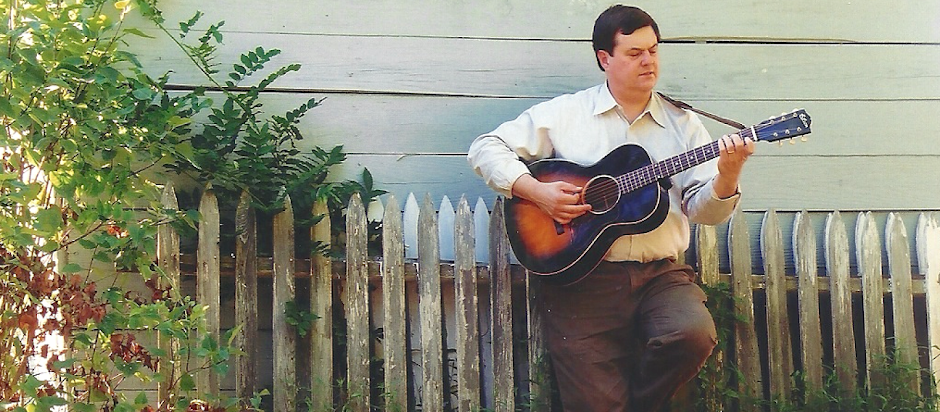
Ken Lelen sings great American ragtime, jazz & swing and plays vintage acoustic guitars for an authentic, back-in-the day sounds. Photo by Mike Nixon - Aug 2002.

Tuesday, June 2, 2015

Lion in Winter — Luthier Randy Wood 
       _______________________________________
             ©  2015  —  Kenneth  Lelen  —  All  Rights  Reserved

A recent eight-day concert tour in the Carolinas and mid-Georgia in May 2015 offered me an excuse to visit Randy Wood Guitars — Instruments and Repairs   in Bloomingdale GA.

In the past 45 years the 72-year-old luthier has hand-built 1,000 or more guitars, mandolins, banjos, resonator guitars and violins. Clients have included some marquee musicians (think: Big Mon, The King, Slowhand, and the Man in Black, among others) and run-of-the-mill porch pickers alike.

                                                                                                                                                                     PIX: KL
Georgia luthier Randy Wood with the restored and refinished body of an early 1920s
Gibson L-4 guitar (fingerboard and headstock on left) he's converting to mandocello.

Wood has also restored a lot of instruments in his day, and he often has interesting repair jobs on hand. The only Foden guitar I've ever seen was in Randy Wood's shop. Genial, gregarious and generous with his time, he is as eager to show off his work as he is to see what you're playing.

Over the years I've traveled in the Southeast on concert tours I've bought and sold a few guitars at his shop. I also hired Wood to restore a 1951 Epiphone Triumph Regent, an archtop guitar given to me by the widow of its original owner, John Gordon "Gordy" Burgess (1915 - 2005) of Chicago.

This time, I hoped to play a few guitars in the store, see some current repair projects and join a long-running Saturday bluegrass jam. But my main mission was to show Wood a fine vintage guitar of mine and pellet him with questions on its design.

In all, it was worth the trip, despite a three-hour, high-speed voyage on the rollers and breakers of Route 16 in the Peachtree State.


Wood's store offers acoustic treasures

Every time I visit the Randy Wood Guitar store and workshop I find treasures in every corner. This occasion was no exception.


                                                      PIX: G&G
Randy Wood 12-fret
slope-shouldered dreadnought
In addition to 40 new, used and vintage acoustics and several electric guitars, there were three Randy Wood guitars on the walls of the 900-square-foot store. Two were brand new, one was four years old.

Not one to ignore trends in acoustic music circles, Wood's newest guitars are 12-fret slope-shouldered dreadnoughts which, like all Wood guitars, don't carry model names. Priced at $3,500 and finished with sunburst spruce tops, one had a mahogany body, one had a maple body.

Both had an unusual-shaped pickguard that resembles a bandanna on a cowboy's neck. Each had a full-figured, deep-throated sound. In my view, of the two dreadnoughts, the maple-bodied guitar stood out for its unstinting presence and aural aroma.

The third guitar was a 12-fret slope-shouldered dreadnought built in 2011. It has koa wood back and sides and a cutaway spruce top. Consigned at $2,995, this guitar has a sound that's smooth and bright. It's as fine an example of a Randy Wood instrument as any.

Wood inspects his first Weymann guitar
Before long, Randy Wood came into the store to inspect the c. 1930 Weymann No. 840 grand concert guitar I'd brought with me to show him.

Its has 12 frets to the body, mahogany back and sides, rosewood bridge, rosewood binding and rosewood fingerboard. It also has a spruce soundboard, inlaid purfling around the soundhole, rosewood veneer on a slotted headstock, and inlaid Waverly tuners.

The guitar body's lower bout is 14½–in. wide and 4-in. deep. It was called “Auditorium Size” in catalogs issued by H.A. Weymann and Son of Philadelphia, which built and sold it for $45 (retail) in the late 1920s and early 1930s.

                                                       PIX: KL
c.1930 Weymann No.840
What makes this guitar unusual and worth a trip to an experienced and highly regarded luthier like Randy Wood is its interior design. Under the hood it has six back braces — not five like other guitars. More importantly, it has a single tone bar on the bass side of the X brace — not one or two tone bars on the treble side of the X brace like other guitars.

The Weymann's tone is robust, sweet and clear. A lightweight guitar, it has a crisp treble, loud midrange and heart-throbbing bass.

When Wood held and played the Weymann No. 840, his eyes lit up. “Oh, that’s nice,” he drawled. “I've never seen one of these, only their [Weymann] banjos."

When I told him about the tone bar coming off the bass side of the X brace, he paused for a long minute.

“You know, I’ve been doing that on my guitars for years,” said Wood, who opined the design could be not be patented.

“Folks don’t realize how it emphasizes the bass on a small [sic] guitar like this," he added. "You don’t need the [tone bar] support on the treble side like everybody says.”

I asked Wood if he thought this guitar was perhaps built for a left-handed player. “Doubtful,” he said. Unlike every other guitar maker of the day, “These people wanted it [built] this way.”

Wood has mandocellos on his mind
Next thing I know Wood said, "You'll want to see this," and pulled me into his workshop to see a 1920s Gibson L-4 guitar he was converting to a mandocello.

The instrument was in the finishing booth, one of several rooms and garage-like chambers that comprise the workshop. Hanging from the ceiling was the restored and refinished body of the guitar.

Nearby, on the original neck, was a newly fretted fingerboard and reworked headstock. Wood had already expanded the headstock to accommodate eight tuning machine holes and installed a Gibson logo replica.


                                             PIX: RWG
Randy Wood's mini jazz guitar
Then, Wood showed me an unusual six-string acoustic guitar he'd just completed, a prototype Wood and store manager Robert Carter call a mini jazz guitar. It has an ebony fingerboard and bullet-fast neck (1¾-in. nut width) that joins the body at the 17th fret.

The guitar has a sunburst, 13½-in. wide maple body and carved spruce top with f holes. The top has a sunburst finish, soft cutaway and ebony pickguard in the contemporary jazz-box style.

As I played the mini jazz guitar it reminded me of the sound and feel of a late 1920s Epiphone Recording D archtop guitar. I enjoyed the playing ease and sound, and only stopped playing when I realized I didn't know the notes on many musical tunes above the 14th fret.

Wood said he was inspired to build the mini jazz guitar by the appearance and dimensions of a vintage mandocello. Unlike a solid-body Les Paul guitar, Wood's mini jazz guitar offers an acoustic sound that is incisive, smooth and loud out of proportion for its size. Yet, because of its size and light weight, it is extraordinarily easy to hold and play.

Nearly finished, he says he plans to mount a pick-up along the end of the fingerboard and add a truss rod cover. He has not yet announced a price for this instrument.

Bluegrass jam on a Saturday afternoon
I played the mini jazz guitar until I realized it was time to resume my trip. I'd run out of time for the bluegrass jam, which was just beginning in the store.

Three players — guitar, banjo and fiddle — showed up. They'd moved some of the accessory displays for playing space and begun warming up. They played and talked, then played some more, as they waited for a tardy bass player.

Once the bass player appeared, it was time for me to leave, so I thanked my host and continued my travels.

                                                                                                                        PIX: KL
Randy Wood Guitars
1304 E. Hwy. 80, Bloomingdale GA 31302
912-748-1930
randywoodmusic.com
______________________________________________________________
© 2015 — Kenneth Lelen — All Rights Reserved

Saturday, May 2, 2015

Big Band Idols —
alluring draw in Weymouth
_________________________________________
   ©  2015 — Kenneth Lelen — Al Rights Reserved

                                 All photos: Sheethal Surendran
Ken Lelen at Whipple Senior Center, April 24, 2015
The Town of Weymouth MA hosted a Big Band Idols concert by vintage guitarist and vocalist Ken Lelen for more than 125 seniors on Friday, April 24, 2015 at Whipple Senior Center.

Jointly sponsored by Weymouth Elder Services and Weymouth Cultural Council, the event was held in the gym of a former elementary school and managed by Chris Quinn, volunteer coordinator at the senior center.

Quinn was assisted by several people who set up tables and chairs, handled event reservations, tickets and reserved seating. In addition, they provided personal escorts for the disabled, event photography, refreshments and clean up.


Chris Quinn handled intros at concert
Quinn was volunteered into directing the Weymouth concert at the last minute due to the unanticipated retirement of Susan Barnes, the senior center's director. As a result, Quinn was thrust into the multi-faceted role of managing the logistics of a mid-day event for an audience of 125 elderly people, a 60-minute concert by an unknown musician, and a boisterous post-concert social hour complete with cake, ice cream and coffee.

Back-in-the-day sound
For an authentic back-in-the-day sound, Lelen sang hits from the Big Band period and performed each song with an acoustic guitar made in the same era.

The songs the musician played were hits during the 1930s and 1940s for Frank Sinatra, Jo Stafford, Helen Forest, Dinah Shore, Peggy Lee, Ella Fitzgerald and other vocalists. Back in the day these singers fronted Big Bands, jazz combos and society orchestras for Les Brown, Glenn Miller, Benny Goodman, Artie Shaw, Ted Weems, Count Basie, Paul Whiteman and other band leaders.

Lelen outlined a bit of the history and romance of the Big Band era. Many of the tunes he sang were introduced with an amusing story of the big-hit singers, pop tunes, composers or band leaders of the era.

Many times the source of these stories are the people (like the woman in the photo below) who attend a Vintage Music Concert. Frequently, they will recount a story from "back in the day" — a personal memory of an event, Lelen said.


The stories, events and personal reminiscences are then combined with information Lelen gathers from various musical texts he has studied. He also visits many websites that offer videos of Cab Calloway, Slam Stewart, Louis Armstrong, Peggy Lee, Mildred Bailey and others on YouTube. Then, he fact-checks his musical tidbits at Wikipedia.

Big Band Idols concert
offered favorite songs

Sentimental Journey — Written in 1944 by Les Brown and Ben Homes with Bud Green (lyrics), this song was recorded by Dinah Shore and Les Brown’s Band of Renown. A #1 single from May to July, 1945, just as World War II ended in Europe, the record was a favorite of many homecoming veterans.

Heartaches — This song was composed in 1931 by John Klenner (lyrics) and Al Hoffman (music). It was recorded by the Ted Weems Orchestra, with whistler Elmo Tanner, in 1933, but never charted. In 1942 Weems disbanded his group and, like many musicians in the era, went off to the war.

One night in 1947 a Charlotte NC disc jockey re-discovered Weems' version of "Heartaches" and played it again and again. People requested the song on the radio and it grew popular enough that RCA Victor Records re-issued the Weems recording. His record ultimately reached #1 in February, 1947 and spent 16 weeks on Billboard’s best seller chart.

Why Don’t You Do Right? Written by Joe McCoy, this song was recorded by the Harlem Hamfats in 1936 as “Weed Smoker’s Dream.” Re-written and re-titled “Why Don’t You Do Right?” by McCoy, it grew into a woman’s blues tune as recorded by Lil Green (second wife of Louis “Satchmo” Armstrong) in 1941.

In July, 1942 vocalist Peggy Lee convinced bandleader Benny Goodman to record the song. Their version sold more than one million copies and brought the Nebraska native to national notice at the tender age of 22.

I’ll Be Seeing You — Written in 1938 by Sammy Fain (music) and Irving Kahal (lyrics), this song was part of Right This Way, a Broadway musical that closed after 15 performances.

In the 1940s this wistful song was recorded extensively. The more popular it became, the more it was recorded. It was covered by Frank Sinatra, Connee Boswell, “The Incomparable Hildegarde,” and Billie Holiday, among others. Bing Crosby’s July, 1944 rendition was probably the biggest hit of the Big Band era.


“I’ll Be Seeing You” had its moment. Along with “Sentimental Journey” and “It’s Been A Long, Long Time,” it was a favorite of people on the home front as well as home-bound soldiers in the Spring of 1945 as WW II ended in Europe.


Moonglow — Written in 1933 by Will Hudson and Irving Mills with Eddie DeLange (lyrics), this jazz standard’s popularity grew during the 1930s in the hands of many artists, including Joe Venuti’s Orchestra and singer Ethel Waters and Benny Goodman’s Orchestra.

Today, most seniors remember the song as a danceable hit by clarinetist Artie Shaw and his band in 1941. But "Moonglow" was also recorded by other artists, including June Christy in 1946, Billie Holiday in 1952 and Sarah Vaughan in 1962.

Paper Doll — This tune was a #1 hit for the Mills Brothers from November, 1943 to January, 1944. It was written in 1915 by pianist and part-time boxer Johnny Back. Inspiration for the song came when a "fickle-minded real live girl" jilted Black for another boxer. He died in 1936, six years before the Mills Brothers' version of the song swept the country.

Concert's lively audience
Early in the concert Lelen announced he resides ½ mile up the hill from the Delaware River, 10 miles north of Trenton and halfway between New York and Philadelphia. Upon hearing this, a man in the audience stood up.

“Are you from New Jersey?" he asked. “Isn’t that where the Hindenburg crashed?”


In May, 1937 the German-made, heavier-than-air airship caught fire and was destroyed as it tried to land at Naval Air Station in Lakehurst, 10 miles from the Atlantic Shore of New Jersey. Though 36 people died in the disaster, 62 on board the Hindenburg survived, according to Wikipedia.

When the musician acknowledged the airship crash indeed happened in New Jersey, albeit 78 years ago, the man advised the singer: “Well, you’d better be careful.” With that comment, the crowd howled with laughter.


Vintage tones
The musician also played several vintage acoustic guitars at the Weymouth event. Each makes sound that’s remarkable for its sustain, character and tone without use of pick-ups, he said. The guitars Lelen played at Whipple Senior Center concert were:

1935 MarvelTone — x-braced grand concert rosewood guitar made by Regal Musical Instruments of Chicago.

1929 Galiano — ladder-braced, auditorium-sized mahogany guitar, custom-made by Antonio Cerrito of New York City’s Little Italy.

1933 Senorita — an x-braced mahogany and spruce concert guitar and
1936 Groton 1 — ladder-braced mahogany and spruce auditorium guitar
— both made by Regal and sold by Bacon & Day of Groton CT.

1928 Weymann No. 840 — x-braced, auditorium-sized mahogany and spruce guitar made by Weymann Co. of Philadelphia.


_________________________________________
Copyright © 2015 — Ken Lelen — All Rights Reserved


Tuesday, April 28, 2015

Legendary Love Songs invigorate
men’s club members and their spouses
_________________________________________
   ©  2015 — Kenneth Lelen — Al Rights Reserved

                                                                                       All Photos: George Barry
Ken Lelen at concert for Retired Men's Club of Greendale

held in the Worcester MA Senior Center on April 22, 2015

The Retired Men’s Club of Greendale hosted a morning coffee-and-donut social and concert for more than 135 people on Weds., April 22, 2015 at the newly updated Worcester Senior Center, which sits atop Vernon Hill in Worcester MA.

Vintage guitarist and vocalist Ken Lelen sang a baker’s dozen of love songs from the 1920s, 1930s and 1940s. He also paired each song with an acoustic guitar from the same era for an authentic, back-in-the-day sound.

The romantic songs the musician performed originally were hits for such vocalists as Big Bill Broonzy, Mildred Bailey, Louis Armstrong, Rudy Vallee, Frank Sinatra, Kate Smith, Rosemary Clooney, Vera Lynn, the DeCastro Sisters and others.

Members and their wives 
A private, fraternal organization of more than 200 retired men, the audience included Club members and their wives for the social event, short business meeting and 45-minute concert.

The Legendary Love Songs program included these songs:

Glory of Love — This chestnut, written by Billy Hill in 1936, was a #1 hit for Benny Goodman. The Five Keys had a #1 R&B hit on it in 1951, and the song was famously recorded by Big Bill Broonzy in 1956 and Peggy Lee in 1959. Folksinger Tom Rush even made a worthy cover of Broonzy's hit in 1968.

I'd Rather Listen To Your Eyes — This obscure foxtrot by Harry Warren (music) and Al Dubin (lyrics) spawned fleeting hits in 1935 for Mildred Bailey (“Queen of Swing)” and Al Jolson, an emotional shouter known back in the day as “The World’s Greatest Entertainer.”

She’s Funny That Way — Written in 1928, this Neil Moret (music) and Richard Whiting (lyrics) torch song is told from a man’s point of view. First recorded by Gene Austin in 1928 and the Dorsey Brothers Orchestra (vocal by Jerry Cooper) in 1933, it lingered in obscurity until vocalists Frank Sinatra and Billie Holiday, clarinetist Benny Goodman and tenor saxophonist Lester Young (“Prez”) recorded it in the 1940s and 1950s. Tony Bennett even recorded it twice, in 1967 and 1997, the latter version in a tribute to Billie Holiday.

I’ll Be Seeing You — Written in 1938 by Sammy Fain (music) and Irving Kahal (lyrics), this song was in a Broadway musical that closed after 15 performances. However, in the 1940s this wistful song was recorded extensively by, among others, Connee Boswell, Frank Sinatra, Bing Crosby, Billie Holiday and “The Incomparable Hildegarde.” It was a favorite on the home front as well as for home-bound soldiers in the Spring of 1945 as World War II ended in Europe.

Dream A Little Dream Of Me — Written in 1930 by Fabian Andre and Wilbur Schwandt (music) with Gus Kahn (lyrics), it was recorded in February, 1931 by singer and band leader Ozzie Nelson.

At the Greendale event Lelen recalled meeting a nonagenarian at a 2002 concert in Red Bank NJ who saw Kate Smith introduce “Dream A Little Dream Of Me” in April, 1931 at Boston’s Metropolitan Theater. Two years later he met an elderly man at a Bethlehem PA concert who helped build the Tremont Street theater in 1925. Recently, Lelen learned that after a $9.8-million restoration in 1983, the 3,600-seat facility became Wang Center for the Performing Arts. It was renamed Citi Center in 2006.

Teach Me Tonight — Written in 1953, this Gene DePaul (music) and Sammy Cahn (lyrics) song charted at #2 for the DeCastro Sisters (Peggy, Cherie and Babette) in 1955. Cahn even wrote a new verse for Frank Sinatra in 1984 to reference Frank’s many love affairs. 

Vintage guitar tones
The musician played several vintage acoustic guitars at the Greendale event. Each makes sound that is remarkble for its tone, sustain and character without the use of pick-ups or electronic gimmicks, he said.

The guitars Lelen played at the Greendale concert were:

•  1935 MarvelTone — rosewood grand concert by Regal Co. of Chicago;

•  1930 Galiano — spruce and mahogany auditorium guitar custom-made by Antonio Cerrito of New York City’s Little Italy;

•  1933 Señorita grand concert and 1936 Groton auditorium — both from Bacon & Day of Groton CT;

•  1933 Weymann #840 — spruce and mahogany grand concert guitar by the Weymann Co. of Philadelphia.

______________________________________
Copyright © 2015 — Ken Lelen — All Rights Reserved

Friday, April 24, 2015


Posted Apr. 23, 2015 at 9:26 PM

Big Band Idols Concert at
Whipple Senior Center April 24
WEYMOUTH, MA — Weymouth Elder Services will host a free concert by vocalist and vintage guitarist Ken Lelen at 1 p.m., on Friday, April 24, at Whipple Senior Center, 182 Green St., Weymouth. For information, call 781-682-6140. 
     For an authentic back-in-the-day sound the musician will perform swing tunes from the Big Band era and pair each song with an acoustic guitar made in the same period.
     The program’s songs were originally hits in the 1930s and 1940s for such vocalists as Frank Sinatra, Mildred Bailey, Helen Forest, Ella Fitzgerald, Dinah Shore, Jo Stafford, Peggy Lee and others. Back in the day these singers fronted Big Bands, jazz combos and society orchestras organized by such band leaders as Benny Goodman, Artie Shaw, Les Brown, Glenn Miller, Teddy Wilson, Duke Ellington, Paul Whiteman, Count Basie, Ted Weems and others. 
     Co-sponsored by Weymouth Elder Services and Weymouth Cultural Council, division of Mass Cultural Council, Lelen’s concert may include such hit songs as:
  
     •    “I’ll Never Smile Again,” Frank Sinatra, vocal, with Tommy Dorsey Orchestra;
     •    “Sentimental Journey,” Dinah Shore, vocal, with Les Brown's Band of Renown;
     •    “There I’ve Said It Again,” Vaughn Monroe, vocal, and his band;
     •    “Route 66,” Nat King Cole, vocal, and King Cole Trio;
     •    “Heartaches,” Ted Weems Orchestra with Elmo Tanner, whistler;
     •    “They Can’t Take That Away From Me,” Billie Holiday, vocal, with Count Basie Band;
     •    “Why Don’t You Do Right?,” Peggy Lee, vocal, with Benny Goodman Orchestra;
     •    “It’s Been A Long, Long Time,” Bing Crosby, vocal, with guitarist Les Paul;
     •    “Don’t Get Around Much Anymore,” vocals by Ink Spots;
     •    “Moonglow,” Artie Shaw, clarinetist with his band;
     •    “Paper Doll,” vocals by Mills Brothers.

     Lelen’s program will trace the history and romance of the Big Band era. To introduce the songs, he’ll offer amusing anecdotes, musings and comments about the singers, songs, composers and band leaders of the era.
     The musician will display and play vintage acoustic guitars by Gibson, Martin, Regal, Schmidt and other U.S. firms. Each makes sound that is striking for its tone, character and sustain without use of pick-ups or electronic gimmicks.
     "People of all ages love the songs,” Lelen said. “They’re often surprised by the robust sound and classy look of vintage guitars.”
______________________________________________________________
© Copyright 2006-2015 Gatehouse Media 

Thursday, April 16, 2015

Big Band Idols 
Concert @ Whipple Senior Center — April 24, 2015 @ 1 pm
Hit songs of vocalists who fronted Big Bands, jazz combos and society orchestras
Vintage acoustic guitars from the 1920s, 1930s and 1940s
Sponsors: Weymouth Elder Srvcs and Weymouth Cultural Cncl, div. of MA Cultural Cncl

Clarinetist Benny Goodman and contingent
of Big Brass from his c. 1940 Jazz Orchestra
Weymouth Elder Services will offer a free concert by Ken Lelen at 1:00 pm on Friday April 24 2015 at Whipple Senior Center, 182 Green Street, Weymouth MA 02191.
     For an authentic back-in-the-day sound, vocalist and vintage guitarist Ken Lelen will sing jazz and swing hits from the Big Band Era and pair each song with a guitar made in the same period.
     With clever lyrics and memorable melodies, songs in Lelen's program were hits in the 1930s or 1940s for such vocalists as Frank Sinatra, Mildred Bailey, Helen Forest, Ella Fitzgerald, Dinah Shore, Jo Stafford, Peggy Lee and many others. The singers often fronted Big Bands, jazz combos and society orchestras led by Benny Goodman, Artie Shaw, Les Brown, Glenn Miller, Teddy Wilson, Duke Ellington, Paul Whiteman, Count Basie, Ted Weems and many others.
     Co-sponsored by Weymouth Elder Services and Weymouth Cultural Council, the concert at Whipple Senior Center may include such favorite hits as:
Orchestra leader Tommy Dorsey with vocalist
Frank Sinatra at RCA Studios in 1941
     I'll Never Smile Again — vocalist Frank Sinatra with Tommy Dorsey Orchestra
     Sentimental Journey — vocalist Dinah Shore with Les Brown's Band of Renown
     There I've Said It Again — vocalist Vaughn Monroe and his band
     Route 66 — vocalist Nat King Cole and his King Cole Trio
     Heartaches — Ted Weems Orchestra and whistler Elmo Tanner
     They Can't Take That Away From Me — vocalist Billie Holiday with Count Basie Band
Orchestra leader Benny Goodman and vocalist Peggy Lee
performing their 1943 hit, "Why Don't You Do Right?"

     Why Don't You Do Right? — vocalist Peggy Lee with Benny Goodman Orchestra
     It's Been A Long, Long Time — vocalist Bing Crosby with guitarist Les Paul
     Don't Get Around Much Anymore — Ink Spots
     Moonglow — clarinetist Artie Shaw and his band
     Paper Doll — Mills Brothers
     "Mr. Lelen is a genial performer, with a pleasant tenor," said New York Times. "The songs he plays will never go out of date."
     Lelen's program will trace some of the history and romance of the Big Band Era. To introduce the songs, he'll offer amusing anecdotes, savory musings or wry comments about the singers, songs, composers, band leaders and America in the 1930s and 1940s. 
     The musician will also display vintage acoustic guitars by Gibson, Martin, Regal, Schmidt and other U.S. firms. Each makes sound that is striking for its tone, character and sustain without use of pick-ups or electronic gimmicks.
     "People of all ages love these songs," Lelen said. "And they're pleasantly surprised by the robust sound and classy look of the vintage guitars."
Jazz pianist and band leader Edward Kennedy "Duke" Ellington, mid-1940s
      Info: 781-682-6140 and www.weymouth.ma.us/elder-services
__________________________________________________
©  2015 — Kenneth Lelen — All Rights Reserved