Ken Lelen

Ken Lelen
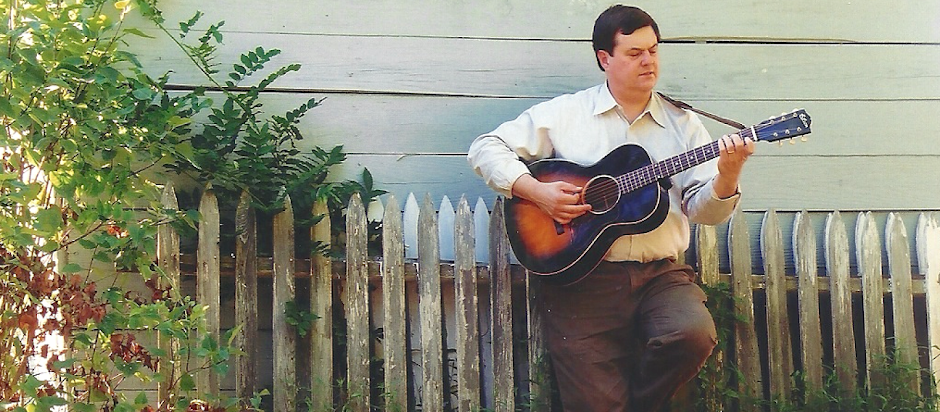
Ken Lelen sings great American ragtime, jazz & swing and plays vintage acoustic guitars for an authentic, back-in-the day sounds. Photo by Mike Nixon - Aug 2002.

Tuesday, April 8, 2025

Martin built 19 guitars for Bacon & Day in the 1920s

Martin made ten 0-21 and nine 2-17 models between 1922 and 1924. Only four Bacons have surfaced in vintage guitar markets since 2005.

__________________________________________________________

© 2025 by Kenneth Lelen — All Rights Reserved

A multi-year study of guitar design, production and sales of C. F. Martin & Co reveals the Nazareth PA firm produced 19 guitars for Bacon Banjo Co of Groton CT from July 1922 to March 1924. Of the 19, only four are known to exist. 

Martin built ten 0-21 rosewood and nine 2-17 mahogany models for the banjo maker, according to scans, photos and analysis of Martin ledgers, supplier inventories, staff records, factory logs, client correspondence and business reports by Canadian archivist Grieg Hutton, who published his compendium as Hutton's Guide to Martin Guitars 1833-1969.

These guitars are not just rare birds. They are priceless gems, with discrete features that can be appreciated by their owners and players, and appraised by vintage guitar authorities.

Hutton's tome lets us marvel at the 136-year process by which Martin designed, built and sold 256,003 instruments, including 19 Bacons. His intense labor and acute scrutiny are a boon to owners, players, dealers, collectors, luthiers and admirers of all Martin guitars.


Four Martin-made Bacons were hiding in plain sight

       1923 Bacon 0-21 - no sn

                             Corwin photo
1922 Bacon 0-21 - no sn

Bernunzio photo

1923 Bacon 0-21 - sn 18909

Elderly photo
1924 Bacon 2-17 - sn 20956
Private photo


For nearly 40 years Martin-made Bacons were believed to exist, but no one could say what they looked like. Most Martin experts could only echo Mike Longworth’s curt view of 1920s Bacons. “A few guitars without Martin stamps were made for the Bacons Banjo Co. about 1924,” said Longworth, company historian and inlay artist. “Some of Bacon’s guitars were probably made by other firms, as well.”

Unlike the better-known Bacon & Day flat tops and arch tops made by Regal between 1932 and 1938, the rarity of the Martin-made Bacons from the 1920s cannot be over-stated. Indeed, only four of the 100-year-old Bacons have surfaced in the past 20 years among players, collectors or dealers in the vintage guitar market.  

For years these four Bacons were quietly and joyously played by their owners and families. Even with the nascent allure of vintage guitars at the turn of the century, they still were objects of dealer opining full of scant detail, historical error and stark speculation.

In the past 20 years these guitars were played on public stages. They were displayed in photographs, correspondence and provenance. And, in the last five years this quartet of Bacons became a subject of diligent research, timely reporting and feature articles on this website.

Martin built instruments for 26 vendors from 1895 to 1935
Hutton describes 26 vendors that participated in Martin's "Customer's Line" from 1895 to 1935. These entities included instrument builders and importers, jobbers, wholesalers, catalog firms, retail emporiums, department stores, music publishers and private instructors.

Of the 26, eight ordered nearly 3,00 instruments in batches of one or two and up to 100 at a time between 1922 and 1927. Like Bacon, they wanted to buy Martin-quality instruments — guitars, ukes, mandolins and tiples — at wholesale prices for resale to their customers, clients and students.

          •••••••••••    Martin's "Customer's" Line – 1922-1927    •••••••••••

           Bacon Banjo Co.                     No Brand                                  1922 - 1924

           Perlberg & Halpin                    Beltone Brand                          1922

           Buegeleisen & Jacobson         S. S. Stewart Brand                 1923 - 1926

           H. & A. Selmer Inc.                  H. & A. Selmer Brand               1923

           W. J. Dyer & Brother                Stetson Brand                          1922

           Grinnell Brothers                      Wolverine Brand                      1922 - 1924

           Rudolph Wurlitzer Co.              Wurlitzer Brand                        1922

           H. A. Weymann & Son             No Brand                                  1923 - 1927

           •••••••••••••••••••••••••••••••••••••••••••••••••••••••••••••••••••••••••••••••••••••••••••••

                                                                                                                                  Hutton's Guide to Martin Guitars 1833-1969

Martin first solicited Bacon's business in early 1922 at a music dealers' convention in N. Y. City, according to correspondence Hutton unearthed. In a July 7, 1922 letter to the Martin company, Fred Bacon, a 59-year-old music industry veteran, said he was approached at the convention by C.F. Martin III, the 28-year-old, fourth-generation scion.

Bacon recalled asking "Mr. Martin Jr. about making some Guitars for us in the white," or unfinished, "and we putting on our own special finish and selling them to our trade as Bacon Guitars."

In the letter Bacon also asked Martin to send "one style that you would list for about $25 and another (concert size) good spruce top, fine grain and rosewood back and sides, just joined without marquetry thru center of back, something you would list at $35 or $40."

Martin's specifications for two Bacon guitar samples
On July 24, 1922 Martin outlined two samples it would build and send to Bacon. The first, identified as "Our #2-17-C," was described as follows:

     Amateur size, Mahogany back, sides and top. Rosewood bindings, Single
     ring rosette of rosewood and ebony. Mahogany neck, rosewood veneered
     head. Rosewood fingerboard & bridge. Seventeen nickel silver frets. Three
     white position marks, six small side dots. Black bridge and end pins. Steel
     strings. Ebony nut, bone bridge saddle. Net price, in the white.....$10.75.

The second, identified as "Our #0-21-C," was described as follows:

     Concert size, Rosewood back and sides. Selected spruce top. Rosewood
     bindings. Top edged with narrow rosewood & maple, Single ring rosette
     of colored marquetry. Mahogany neck, rosewood veneered head. Ebony
     fingerboard & bridge. Twenty nickel silver frets. Five pearl position dots,
     six small side dots. Bone nut & bridge saddle. Ivory-celluloid bridge and
     end pins. Gut and silk-center strings. Net price, in the white.....$20.00.

Martin quoted Bacon a net price of $10.75 for the 2-17-C model and $20.00 for the 0-21-C model.

Waverly tuners on
1923 Bacon 0-21
For u
nknown reasons Martin didn't identify tuners for the sample guitars. However, of the four extant models we find Waverly #1005 or #1008 tuners on an 0-21 guitar (at right) and Dinsmore & Jager #33 tuners on a 2-17 guitar.

Hutton offers a dry but fascinating round-up of the tuning machines Martin installed on guitars during the 1920s. This section has several barely readable charts that itemize year-end inventories.

For example, Martin had about 40 sets of Waverly #1005 and #1008 tuners at the end of 1922, says Hutton. Martin's stock of these tuners grew to about 515 sets at the end of 1924.

We also find Martin had about 104 D & J #33 tuner sets at the end of 1920, but only three #33 tuner sets at the end of 1922. However, these D & J numbers are misleading, Hutton warns.

"The records show that Martin did purchase D & J tuners between 1926 and 1936, even though they do not appear in the inventory records," he explains. It exhausted its stock of D & J tuners "before the end of each year, so none would be counted in the January 1st inventory count."

Bacon did not apply its special finish to Martin's samples
For unknown reasons, Bacon did not apply its special finish on either sample guitar. Instead, on September 19, 1922 Bacon wrote it would return both guitars so Martin could complete them in standard "lacquer finish, natural color."

So, we may assume all of the 1920s Bacons received Martin's standard lacquer finish. However, due to this change in specs it raised net prices on Bacon's guitars to cover its supplemental costs for finishing. The 2-17-C was now $12.50 and the 0-21-C was now $25.00.

Simultaneously, Bacon began ordering more guitars from Martin. It asked for two 2-17 and two 0-21 guitars on September 20, 1922. A week later it asked for two 2-17 guitars built in the Hawaiian style.

"The guitars would have been set up for gut strings, as Martin did for their own Hawaiian guitars at the time," Hutton remarks, "but since no nut extenders were included with the shipment, these must have been supplied by Bacon Banjo."

"C" Line instruments with distinct components
Like other instruments delivered to "C" Line vendors, design elements on the 1922-1924 Bacons varied in discrete ways from the concurrent guitars in the Martin catalog.

Hutton does not explain why such variations occurred on Martin's client guitars. Such changes may have been a fussy fixation to design details by either party in the transaction. They also may have been coincidental attempts to customize guitar design to meet the priorities of a producer or to sate the vendor's demand for marketable instruments.

In any case, variable design details on "C" Line vendors included:
     •  inclusion or omission of a Martin serial number on a neck block;
     •  vendor stamp on the headstock or back brace;
     •  choice or quality of tuning machines;
     •  inclusion of side dots;
     •  paper labels inside client instruments;
     •  marquetry design and location;
     •  rosette details;
     •  fretboard inlays;
     •  variations in neck size or nut width.

Serial numbers on some — not all — Bacon guitars
Hutton pointedly notes serial numbers were stamped on neck blocks of half of the 19 guitars Bacon ordered from Martin in nine tranches from July of 1922 to March of 1924.

None of the eight guitars Bacon ordered in five tranches between July and September of 1922 received a Martin serial number.

All of the 11 guitars Bacon ordered in four sets between February, 1923 and March, 1924 have serial numbers. Hutton lists them as "Regular Martin models with serial numbers supplied but without Martin stamp."

As Martin guitar owners know, this small step makes a big difference. It means we can discern the year of an instrument's completion and even trace its ownership over time.

For the record, Hutton tabulates the Martin serial numbers for the 11 Bacons as follows:

     Four 2-17 guitars ordered in February of 1923 received the
     following serial numbers: 18251, 18254, 18280 and 18282.

     Seven 0-21 guitars ordered in 1923 and 1924 received the following
     serial numbers: 18909, 19327, 19333, 19339, 20090, 20091, 20094.

One of the four recently identified Bacon guitars has a serial number that is not among those itemized by Hutton. It is a 2-17 model bearing Serial Number 20956, a number dating its production to late 1924.

The current owner of this 12-inch wide mahogany-bodied instrument reports it was his father's guitar. "He bought it second-hand sometime in the mid-1930s," he said. "It has been in the family ever since, though played very little."

Bacon finish, logo, back stamp, rosette and tuners
1923 Bacon 0-21 – sn 18909 – lacquer
finish, natural color, three ring rosette
As noted above, once Bacon received its first guitars "in the white" as it requested, Fred Bacon changed his mind and asked Martin to apply a standard lacquer finish. A
s a result, all but one guitar Martin made for Bacon has this lacquer finish in natural color.

The standard finish is evident on the 1923 Bacon 0-21 (at right) with SN 18909. It also has a "regular three ring rosette of colored marquetry" as listed in Martin's specifications for 0-21-C guitars.

1922 Bacon 0-21 — no sn, with
shaded top, single ring rosette
Not all Bacons were finished with the standard natural color. Of the four Bacons we show in this post, the first 0-21-C ordered by Fred Bacon on July 7, 1922 received a vibrant russet-shaded top finish. This guitar also has the single ring rosette Martin originally listed in its specs for the 0-21-C sample.

Strangely, in the last sentence of Hutton's chapter documenting the 19 guitars Martin built for Bacon, he reveals a startling fact about this shaded top guitar. “None of these guitars received any special stamp,” Hutton says, “although the first 0-21-C has 'Bacon' inlaid in pearl in the head stock veneer.”

1922 Bacon 0-21 - no sn
Hutton does not provide documentation for how or where he acquired this info, nor does he say which firm affixed the logo. I think it was Bacon's handiwork, however, because the stylized typeface used for this pearl logo is identical to what Bacon installed on its banjo and mandolin headstocks between its start in 1906 and its demise in 1938.

Not long ago we learned the luthier who performed a neck reset on this shade-top guitar 20 years ago found the letter S inscribed on its dovetail joint. This is another indication of the esteemed lineage of a precious guitar.

Vintage Martin collectors deem the S mark a sign of a "Special Order" guitar, an instrument with one or more custom elements. In his huge chapter on "Technical Specifications" Hutton indicates Special Order guitars were more common in the early part of the 20th Century. Prior to 1930 he says the S was a suffix applied to a style number (0-18S, 0-21S, etc.) on the neck block, but omits comment on its appearance in the dovetail joint.

Back stamp on 1923 Bacon 0-21
Finally, Hutton declares all of the 11 Bacons with a serial number were made with "no name," "no stamp" and "no brand." So we don't expect to see the Martin name splashed across the back brace, neck block or headstock of any of these guitars.

Still, it was a pleasant surprise to find three of the four known Bacons have back stamps on the headstock. Of course, we all know these guitars were built by C. F. Martin & Co., but die-stamped words on these guitars clearly proclaim: "Made by the Bacon Banjo Co. Inc., Groton, Conn, U.S.A."

_________________________________________


•••••••••     Bibliography & Resources     •••••••••
  
Hutton's Guide to Martin Guitars 1833 - 1969 by Grieg Hutton, © 2022 by Centerstream Publ'g, Anaheim Hills CA.

Martin Guitars, a History by Mike Longworth © 1988, 1994, Four Maples Press, Minisink Hills, PA.

Gruhn's Guide to Vintage Guitars by George Gruhn and Walter Carter, 2nd edition, © 1999, Miller Freeman Books, San Francisco, CA.

Martin Guitars by Jim Washburn and Richard Johnston © 1997, Rodale Press, Emmaus, PA.

•••••••          •••••••          •••••••

"Bringing Home the Bacon & Day" — posted Weds, July 15, 2020 at http://kenlelen.blogspot.com/2020/07/bring-home-b-d-rare.html

"Recent Bacon & Day sightings" — posted Thurs, July 16, 2020 at http://kenlelen.blogspot.com/2020/07/recent-b-d-sightings-rare.html

"Four Martin-built Bacons surface" — posted Weds, March 21, 2021 at


"Martins Specially Made For Other Firms" — posted at www.vintagemartin.com

"Mike Longworth — The Martin Guitar Company's First Historian" — by Steven Stone, Vintage Guitar Magazine, February, 2000 — reprint available at:


__________________________________________________________

© 2025 by Kenneth Lelen — All Rights Reserved


Wednesday, February 12, 2025

Two gents with guitar + mandolin
Saettele Studio, St. Louis - 1894

Concert Booking Info

Updated for 2025


Ken Lelen

609-306-8711 - mobile

609-730-9313 – office


PO Box 64 Titusville NJ 08560

www.KenLelen.blogspot.com

Kenneth.Lelen @ gmail.com


_________________________________________________________________________

This post addresses typical program, budget, logistics & publicity issues that concert hosts investigate when they're planning an event. 


Over the past 25 years I've found such matters can easily be covered in a 15-minute phone call. Nevertheless, some folks today are only willing to deal with such issues in a back-and-forth stream of texts and emails. Still, I'll always welcome a chance to talk directly with a concert host — the person I'm going to work with to deliver an event.


I perform concerts for a diverse group of small & medium-sized venues, including churches, arts & culture commissions, public libraries, life-care communities, acoustic music clubs, social, charitable & fraternal groups, community colleges and local senior centers. Each weighs a distinct mix of considerations as they assess program content, budget, logistics and publicity for an event.


Given the range of venues and events I work on, I find it difficult to set a one-price-fits-all fee for individual concerts. Instead, I tell prospective sponsors the fees I received in the last year were modest — ranging between $300 and $600 per concert and averaging $475.


Then I ask three questions: Which of my two dozen concert themes will suit your audience? What dates do you prefer? And what budget do you propose for this event?


Not surprisingly, when we reach the nitty-gritty of a booking call, every host wants to negotiate their fee, jockey back and forth on a preferred date, and discuss a concert theme that will please their audience – the folks I'm going to entertain. These are familiar pursuits for me as well.


        ADDITONAL BOOKING DETAILS

_________________________________________________

Concerts offer ragtime, swing, jazz & pop music,

playing of vintage American acoustic guitars and

programs on historic, romantic, musical themes.


I request 6 ft table, one bottle water, staff intro.

I bring sound system, guitars + equipment cart.

I request 45-minute set-up and 30 min. re-pack.

I insist on NO cells, texts, videos during concert.


Concerts range from 60 to 90 mins w/o a break.

Adult & senior audience age range: 40-90 years.

I check that my audiences can all hear me, and

I inform them when we’re nearing concert’s end.

I do not sell merch, CDs, tee shirts or literature.


Always booking dates 2 - 18 months in advance.

I send hosts one-page Concert Letter or Voucher

to be signed by both parties with Invoice & W-9.

Also offer PR release, photo, poster & bookmark.

Payment of concert fee—expected at event.

_________________________________________________


Please Note:

Ken Lelen is 2x vaccinated and 3x boosted for Covid-19,

maintains a current Certificate of Liability Insurance and

has N.J. Business Registration Certificate.


_________________________________________________


© 2025 — Ken Lelen — All Rights Reserved


Sunday, December 15, 2024

She Did It Her Way

Celebrating female vocalists, recording artists & composers with stories and songs


Nashville songwriter
Cindy Walker (1918 - 2006)

   March is Women's History

   Month, and for more than a

   decade I've been invited to

   play She Did It Her Way

   concert programs numerous

   times for my audiences at

   public libraries, life-care

   communities, social clubs

   and other venues.


   Most recently, I performed

   this program for audiences

   in Erie and Pittsburgh PA, in

   Dover DE, in Middlesex,

   Whiting, Milltown, Toms

   River and Bloomfield NJ, in

   Parksville and Frederick MD,

   and in Pound Ridge NY.


The program features stories and songs of female vocalists active from the late 1920s to mid-1960s. We highlight the hit tunes of such musical luminaries as Bessie Smith, Ella Fitzgerald, Billie Holiday, Jo Stafford, Judy Garland, Kate Smith, Dinah Shore, Peggy Lee, Mitzi Gaynor, Patti Page and Dinah Washington.


In late 2023 the program expanded to honor female composers of pop songs. Concerts included tunes written by such talented female songwriters as Chilton Price, Dorothy Fields, Cindy Walker, Claire Rothrock and Sadie Vimmerstedt.


Tin Pan Alley Songwriter
Dorothy Fields (1905 - 1974)

The emotional strength of their music and the cultural contribution of their art has been over-looked by fans, musicians and media for too long. What's more, few of these women saw a lot of recognition for their work during their lifetime despite the many popular hit songs most of them produced. To put it bluntly, people liked the songs, but they never really knew who composed them.


Over the past few years my audiences have given a warm response to hearing about these female vocalists and composers, as well as their stories and their tunes. As a result, these artists have become the key element of what is now my most popular concert program.


                               _________________________


Program offers songs by these female vocalists:


The Lady Is A Tramp — This song was launched into popularity by former child actor Mitzi Gaynor in a 1937 coming-of-age Broadway play, Babes In Arms. The song is a spoof of big-city socialites and the clever contrivance of the composer Richard Rodgers and lyricist Lorenz Hart. Gaynor would meet fame and fortune from her starring role in the 1958 movie musical South Pacific.


The song was also sung in 1937 by Edythe Wright, a vocalist in Tommy Dorsey's band and Judy Garland in 1939 for the Hollywood version of the play. Lena Horne had a hit with the song in 1948 and Frank Sinatra saw huge LP record sales with it by his singing role in the 1957 movie Pal Joey.


Time has only deepened the sonic well of this song. To wit, the most exciting and classy version of this song just might be the combination of the 25-year old pop icon Lady Gaga and an 85-year old Tony Bennett for his 2011 album Duets II.


      Lady Gaga and Tony Bennett sing "The Lady Is A Tramp" in 2011


I’m Through With Love — This jazz standard was composed by Fud Livingston, Matty Malneck and Gus Kahn in 1931. Early covers by female vocalists included Dinah Shore in 1941 and 1951, Sarah Vaughn in 1947, Carmen McRae in 1957, and Ella Fitzgerald in 1959.


The song gained notoriety and a perch in the pantheon of torch songs by Marilyn Monroe, who played vocalist Sugar Kane in the 1959 film, Some Like It Hot. Near the movie's end she sings it as a lovelorn lament while perched atop a piano in a black slinky dress. Some say her dress was as memorable as the song.


    Marilyn Monroe sings "I'm Through With Love" in the 1959 film Some Like It Hot

Dream A Little Dream Of Me — This dreamboat of a song was written by the orchestra leader Fabian Andre, arranger Wilbur Schwandt and lyricist Gus Kahn. It was first recorded in 1931 by band leaders Ozzie Nelson and Wayne King with vocals from their “girl singer,” Kate Smith.


Plucked from obscurity in 1968, the song became the signature tune of Cass Elliott, a member of the folk-rock group The Mamas & The Poppas. Her solo recording sold seven million copies.


         Cass Elliott sings "Dream A Little Dream Of Me" in 1968

On A Slow Boat To China — This is a 1948 ballad by composer and lyricist Frank Loesser, who wrote tunes for many successful Broadway musicals and Hollywood films made from the late-1930s to mid-1960s. A 1993 biography by his daughter Susan Loesser states the song was her father’s romantic twist on the well-known poker term that derides the hapless person who loses “steadily and handsomely” at cards.


It seems everyone and his cousin likes to give this song the up-tempo crooner treatment, usually seasoned in Dixieland or Vegas overtones. This musical rabble includes covers by Jo Stafford, Peggy Lee, Joni James, Rosemary Clooney, Bette Midler and Liza Minelli.


In my view, however, it wasn’t until Ella Fitzgerald teamed up with guitarist Joe Pass for their 1986 album Easy Living that “On A Slow Boat To China” received the artful, wistful, romantic treatment it deserves.


         Ella Fitzgerald and Joe Pass perform "On A Slow Boat To China" in 1981


                               _________________________


Program has songs by these female composers:


You Belong To Me — This popular ballad from 1951 is memorable to many fans for its opening line: “See the pyramids along the Nile.” It was entirely written by [Ms.] Chilton Price, who had little experience in the pop music world.


So, when the song was published she shared credit with two experienced hands — country music artists Pee Wee King and Redd Stewart — who gave assistance with publicity, distribution and tinkering with the lyrics.


Indeed, King and Stewart revised the song's lyrics from its original late-1940s wartime focus to one with a universal view of separated lovers. As a result, the song has had an appeal for fans generations apart.


It was first recorded in the summer of 1952 by Joni James, Jo Stafford, Patti Page, Ella Fitzgerald and Dean Martin. Best of the bunch was the smooth and sweet vocals of Jo Stafford, whose 78 rpm record spent 24 weeks on pop charts in the U.S. and U.K.


A decade later The Duprees, a five-man doo-wop group from Jersey City NJ, saw their 45 rpm record reach No. 6 on Billboard’s Hot 100 chart. Believe it or not, the one and only Ringo Starr also recorded this song — a boisterous and speedy dance-hall variant — in 1981.


         Jo Stafford sings "You Belong To Me" in 1952

         The Dupree's sing "You Belong To Me" in 1962

You Don’t Know Me — This ballad was written in 1955 by country music song writer and lyricist Cindy Walker after country music singer Eddy Arnold cornered her at a disc-jockey convention in Nashville and pitched an idea for a song with this title.


Walker agreed to turn Arnold's concept into workable lyrics and melody, she told an interviewer for the Grammy Foundation Living History. “Let me let it cook and I’ll let you know,” she told him.


“I was up in my little studio just sitting there. All of a sudden, here comes this song. 'You give your hand to me and you say hello'," she recalled.


"But I couldn't finish it. I couldn't find any way to finish it. Maybe two or three weeks went by and nothing happened. One day, [I thought] 'You give your hand to me and then you say goodbye,' and when it said that, I knew exactly where it was going.


“To make a long story short, I couldn't wait to get to the phone to call Eddy." Lest it go unsaid, a hit recording by Eddy Arnold quickly followed.


Many people have recorded this song, but the best-selling version was the plaint and anguished cover by Ray Charles in 1962. It peaked at #1 for 14 weeks on Billboard’s Pop Album chart. Today, it’s revered as the most soulful version of an emotionally impactful tune.


         Ray Charles sings "You Don't Know Me" in 1962

I Wanna Be Around — This originally was planned as a revenge song from Sadie Vimmerstedt, a Youngstown OH widow and cosmetologist. In the early 1950s she was upset Frank Sinatra divorced his wife Nancy and married Ava Gardner, who eventually left him.


Sadie began to write the song only to realize her musical skills were limited. So, in 1957 she sent a handwritten note to tunesmith Johnny Mercer with the song’s first line — "I want to be around to pick up the pieces, when somebody breaks your heart." She asked for Mercer’s help in finishing the ballad, which took another five years.


In 1963 balladeer Tony Bennett had a big hit from Sadie and Johnny’s collaboration. Mercer gave Sadie half the song’s royalties, which were sizeable given the number of people who recorded it. Among the many covers by female artists are records by Aretha Franklin, Patti Page, Julie London, Brenda Lee, Dinah Washington and Eydie Gormé.


       Tony Bennett sings "I Wanna Be Around" in 1963


I Don’t Know Enough About You — This is a very clever song written by a pair of very clever people, vocalist and lyricist Peggy Lee, and her husband, writer and guitarist Dave Barbour. They married in 1943 while both performed in the Benny Goodman Orchestra. Within a year, both left, however, due to Benny’s prohibition on band members fraternizing with his “girl singer.”


By 1945 they were writing songs and making records for Capitol Records. Peggy would record the song three times in her life — in December 1945, January 1956 and September 1992.


This version of the song was produced in 1950 as a promotional film that reveals the couple’s obvious chemistry. Key to this achievement is Peggy’s jazz-tinged vocals and subtle facial gestures, as well as Dave’s smooth guitar work.


            Peggy Lee and Dave Barbour perform "I Don't Know Enough About You"


                                 © 2024 — Kenneth Lelen — All Rights Reserved